




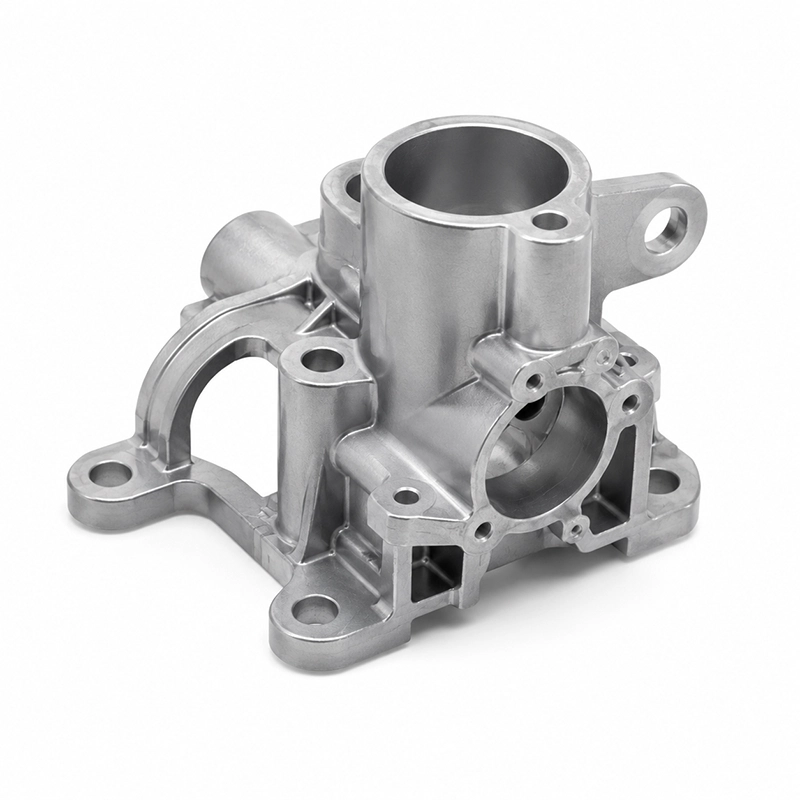

Custom Zinc Die Cast Components
Custom zinc die cast components can incorporate thin sections, recessed areas, mounting features, and carefully defined external surfaces in one metal part. Zinc alloys are suited to forming detailed geometries through die casting, making the process relevant to compact industrial hardware and consumer product components.
Quick Info:
- Material: Zinc Alloy Zamak 3 / Zamak 5
- Process: High Pressure Die Casting
- Wall Thickness: 0.8–4.0 mm
- Dimensional Tolerance: ±0.05–0.20 mm
- Surface Finish: Plating / Painting / Polishing
- Lead Time: 15–25 Working Days

Get Free Quote


Detailed Description
Zinc die cast components accommodate small geometric details that support both appearance and mechanical assembly. Hardware handles, connector bodies, lock pieces and compact instrument housings may contain fine ribs, narrow recesses and attachment bosses within the same casting.
Zinc alloys flow readily into suitably designed tool cavities, allowing thin wall sections and detailed contours. Wall thickness, draft angles, parting lines and local thickness changes still influence filling and surface consistency. Close dimensional requirements should be marked on the drawing rather than assumed from the process name.
Available Surface Finishes
- Electroplating: Provides decorative and protective finishes such as chrome or nickel plating.
- Powder Coating: Adds durability and customized colors.
- Painting: Supports different appearance requirements.
- Polishing: Creates smooth decorative surfaces.
- Shot Blasting: Improves surface consistency.
For a compact connector shell, the casting may include a recess for another part, a small mounting point and a visible outer surface. Threads or datum faces can receive secondary machining where their fit needs more control.
Structural & Functional Breakdown
- Fine Detail Features: Supports complex patterns and small geometries.
- Thin Wall Sections: Enables lightweight compact designs.
- Integrated Mounting Features: Threads, bosses and attachment points can be incorporated.
- Dimensional Stability: Maintains accurate geometry during production.
- Decorative Surfaces: Suitable for appearance-focused components.
Plating and polishing can change the appearance of consumer-facing hardware and provide selected surface protection. Finish buildup also changes dimensions, making early allowance around narrow openings or mating joints important.
Key Features
- High Precision Casting: Zinc alloys support tighter dimensional control for small parts.
- Complex Shape Capability: Fine details and intricate structures can be produced.
- Excellent Surface Quality: Suitable for decorative and consumer-facing products.
- Reduced Machining Requirements: Near-net-shape production lowers secondary processing.
- Multiple Finishing Options: Plating, painting and polishing improve appearance.
- High Volume Production: Supports repeated casting of precision components.
Zinc die cast components with repeated decorative patterns may transfer fine features directly from the tool, reducing the need to carve details into each piece after casting.
Applications
- Consumer Hardware
- Automotive Accessories
- Electronic Components
- Industrial Controls
- Mechanical Connectors
- Locks and Handles
- Decorative Functional Parts
The required finish should reflect the alloy and service environment. Corrosion exposure, contact wear and the expected appearance standard influence which coating or polishing route is appropriate for a given part.

Frequently Asked Questions
-
Which types of small features can zinc die casting reproduce?

-
With suitable tooling, zinc casting can form ribs, recesses, mounting bosses, patterned surfaces and detailed external contours.
-
Can threaded mounting points be produced?
-
Casting may provide a pilot or boss, while secondary drilling or tapping can establish the required thread size and fit.
-
How does plating affect dimensional tolerances?
-
A plating layer adds thickness to exposed surfaces. Fits, holes and contact faces should allow for the specified coating buildup.
-
Are visible surface defects possible on cast zinc?
-
Yes. Parting lines, flow-related marks and other surface variations depend on the casting and tool design. Finishing requirements should identify critical visible areas.
-
Can a decorative pattern be part of the casting tool?
-
Fine surface details can transfer from an appropriately finished tool cavity. Extremely narrow or deep features require tool-release review.
-
What finish options are available?
-
The reference includes electroplating, powder coating, painting, polishing and shot blasting. Suitability depends on the alloy and the component.
-
Do all zinc die cast parts need machining?
-
No. Some features can remain as-cast. Critical holes, threads or datum surfaces may call for additional operations.
-
What should be specified for a handle or lock component?
-
Provide fastening geometry, mating interfaces, expected mechanical loading, finish requirements and any visible cosmetic zones.
-
Can a small batch use the same production tool?
-
A dedicated casting tool supports repeated parts once its geometry and process settings are established; volume planning should consider tooling and sample approval.


