



CNC Turning Services
Custom Turned Parts for Prototyping and Production
We provide precision CNC turning services for custom cylindrical parts, functional prototypes, and mass production, supporting the machining of a wide range of engineering metals and plastics. With consistent dimensional accuracy and excellent repeatability, we help engineers complete design validation more efficiently and transition smoothly to scaled production.
Key Capabilities
- Precision tolerances down to ±0.01 mm
- Custom shafts, pins, bushings, sleeves, and threaded components
- Flexible support for prototypes, low-volume batches, and production runs

Request a Quote
Explore Our Capabilities
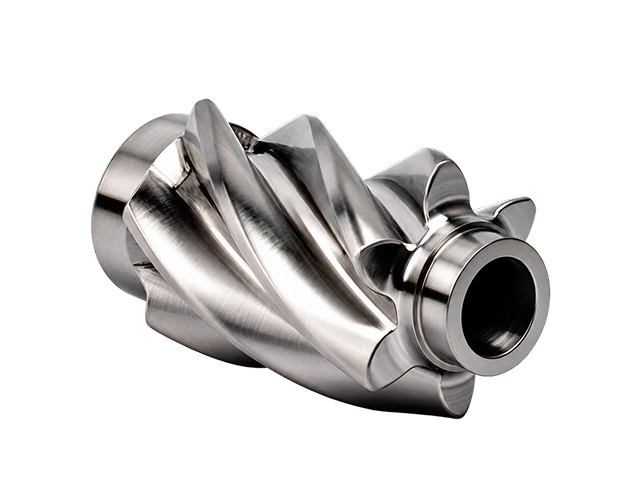


CNC Turning

Dedicated Lathe Machining
±0.01mm
Achievable Tolerance
40M+
Parts Delivered
20+
Engineering Materials Machined
Precision Turning Capabilities
From prototypes and custom components to low-volume and batch production, our precision turning capabilities support a wide range of manufacturing requirements. We machine metal and non-metal materials with a focus on dimensional accuracy, repeatability, and stable part quality, helping customers move efficiently from design validation to production.

External and Internal Turning
Machine precise outer diameters, bores, shoulders, tapers, grooves, and stepped profiles with controlled concentricity.

Threading and Secondary Features
Produce internal and external threads, cross holes, flats, keyways, knurling, and other functional details.
Parts We Turn
From simple shafts and bushings to threaded fittings and multi-feature rotational components, we machine turned parts for mechanical, automotive, electronics, medical, and industrial applications.
Request a Quote
Shafts, Pins, and Threaded Turned Parts
This category includes slender shafts, stepped shafts, pins, plungers, threaded rods, and precision connectors. These parts are typically produced by CNC turning to create outside diameters, end faces, shoulders, tapers, threads, and center holes. Secondary operations such as cross-drilling, flat milling, knurling, or grinding may also be required.


Sleeves, Rings, Flanges, and Thin-Walled Housings
These parts feature rotationally symmetrical structures such as internal and external diameters, tapered surfaces, flanges, stepped bores, and thin-walled cylindrical bodies. Key machining requirements often include concentricity, roundness, consistent wall thickness, and accurate bore dimensions. Thin-walled parts require controlled clamping and cutting parameters to reduce distortion.


Special-Profile, Multi-Material, and Functional Turned Parts
This category includes spherical parts, custom rotational components, brass fittings, plastic threaded parts, and components with additional slots, holes, or milled features. Turning is normally used to create the primary rotational profile, followed by drilling, milling, knurling, polishing, surface treatment, or turn-mill machining.


Materials Engineered for CNC Machining
Choose from aluminum, stainless steel, alloy steel, brass, copper, titanium, and engineering plastics. Material recommendations are based on machinability, strength, corrosion resistance, wear performance, and application requirements.
| Material Category | Common Grades | Key Characteristics | Typical CNC Turned Parts |
| Aluminum | 6061, 6082, 7075, 2024 | Lightweight, corrosion-resistant, and highly machinable | Housings, shafts, spacers, sleeves, and fittings |
| Stainless Steel | 303, 304, 316, 17-4 PH | Corrosion-resistant, durable, and suitable for demanding environments | Bushings, threaded parts, valve components, and connectors |
| Carbon and Alloy Steel | 1018, 1045, 4140, 4130 | High strength, good wear resistance, and suitable for heat treatment | Axles, pins, gears, fasteners, and mechanical shafts |
| Brass | C36000, C27400, C28000 | Excellent machinability, corrosion resistance, and electrical conductivity | Inserts, fittings, nozzles, valves, and electrical components |
| Copper | C101, C103, C110 | High electrical and thermal conductivity | Electrical contacts, terminals, heat-transfer parts, and connectors |
| Titanium | Grade 2, Grade 5 | High strength-to-weight ratio and excellent corrosion resistance | Aerospace fittings, medical components, and precision fasteners |
| Engineering Plastics | POM, Nylon, PEEK, PTFE, PC, ABS | Lightweight, electrically insulating, and resistant to chemicals or wear | Insulating sleeves, rollers, seals, bushings, and custom spacers |
Not Sure Which Material Fits Your Part Best? Explore Material Guide →
Surface Finishing Options for CNC Parts
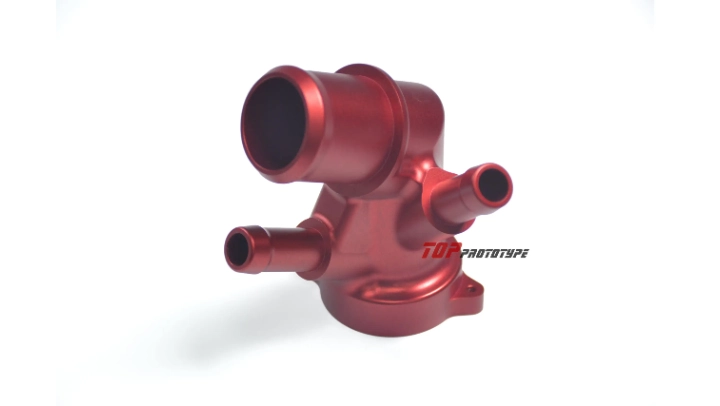
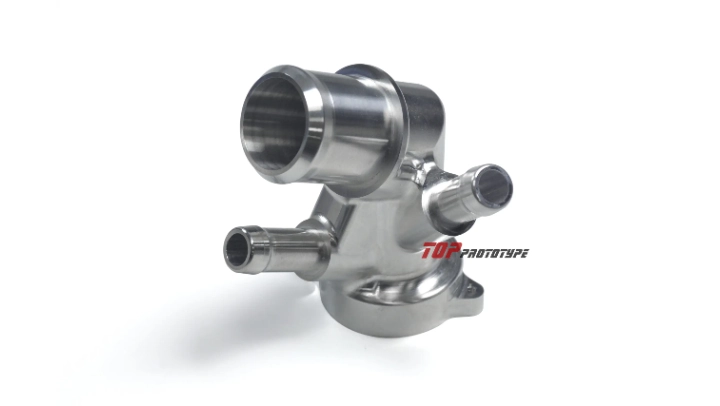

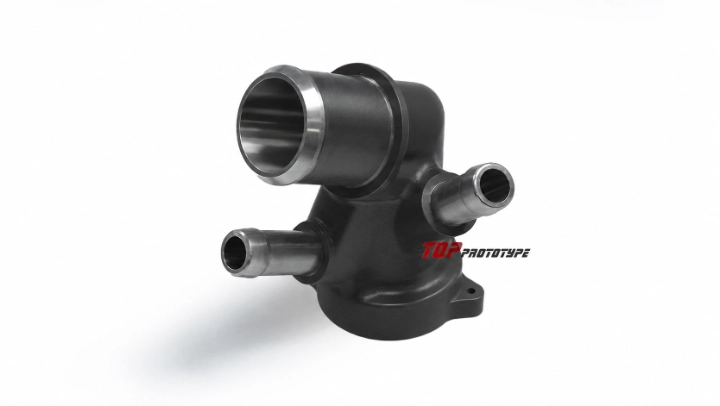
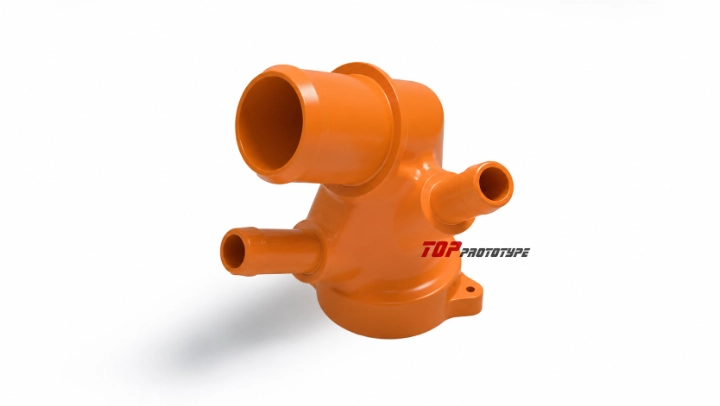
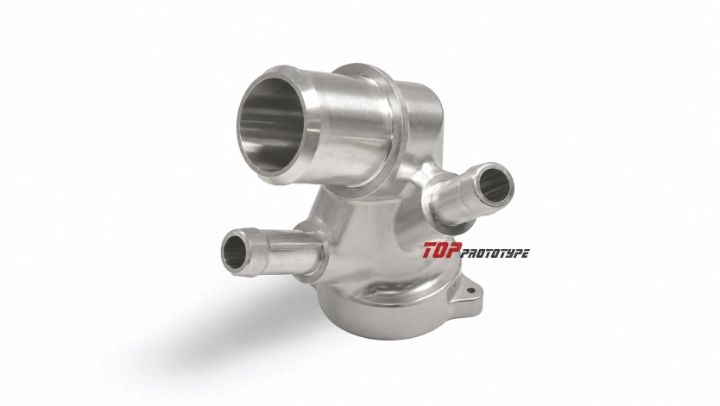
Surface finishes are selected based on functional needs, appearance requirements, and part usage — not just aesthetics.
Explore Surface Finishing Guide

Quality Control Process
-

Drawing and Tolerance Review

-
Engineers review the 2D drawings, 3D models, materials, tolerances, and critical dimensions before machining begins.

-

First Article Inspection
-
The first completed part is measured against the approved drawing to confirm dimensions, hole positions, threads, and machining requirements before continued production.
-

In-Process Inspection
-
Key dimensions are checked during machining to identify deviations early and maintain consistency throughout the production batch.
-

Precision Measurement
-
Depending on the part geometry, inspections may use dimensional imaging systems, pin gauges, thread gauges, internal and external micrometers, or precision height gauges. The document lists two-dimensional imaging measurement accuracy down to ±0.005 mm, pin gauges down to ±0.001 mm, and internal micrometers down to ±0.002 mm
-

Final Inspection
-
Completed parts are checked for dimensional accuracy, surface condition, threads, holes, burrs, and conformity with the approved specifications.



Ready to Validate Your CNC Turning Design?
Share your 2D drawings and 3D CAD files with our engineers to receive practical feedback on part geometry, material selection, tolerances, threading, and production feasibility—before machining begins.
-

Design-for-manufacturing review by CNC turning engineers
-
Tolerance, concentricity, and runout recommendations
-
Material and surface-finishing guidance
-
Fast quotation for prototypes and production quantities
Why TOP Prototype for CNC Turning?

Dedicated Turning Capacity
Multiple CNC lathes support custom parts, repeat orders, and different production quantities.

Parts up to 600 mm Diameter
Turning equipment supports larger cylindrical components with machining capability rated at IT6–IT7.

Comprehensive Inspection
Dimensional imaging systems, micrometers, pin gauges, and thread gauges support part verification.

Secure and Responsive Production
Confidential project handling, flexible scheduling, and reliable delivery support time-sensitive orders.
CNC Turning Frequently Asked Questions
-
What types of parts can TOP Prototype produce with CNC turning?
-
TOP Prototype can manufacture cylindrical and rotational components such as shafts, pins, sleeves, bushings, spacers, threaded fittings, connectors, flanges, and custom precision components.
-
Can TOP Prototype handle low-volume and batch production?
-
Yes. Its documented services include low-volume manufacturing and CNC lathe batch processing, allowing projects to move from initial samples to repeat production.
-
What is the maximum turning diameter available?
-
The documented Baoji CNC lathe capacity supports workpieces with a maximum diameter of 600 mm. Final feasibility depends on part length, geometry, material, chucking method, and tolerance requirements.
-
What CNC turning accuracy can be achieved?
-
The company documents CNC lathe machining accuracy of approximately 0.012–0.016 mm, corresponding to IT6–IT7 capability. Actual tolerances depend on material, feature size, geometry, and inspection requirements.
-
Does TOP Prototype support prototype CNC turning?
-
Yes. The company provides rapid prototyping and precision-parts manufacturing for design verification, functional testing, and customized development projects.
-
What materials can be used for CNC turned parts?
-
The company states that it processes both metal and non-metal materials. Documented project examples include aluminum alloys, stainless steel, zinc alloy, PMMA, ABS, and combined plastic materials.
-
How are CNC turned parts inspected?
-
Inspection equipment shown in the company documentation includes dimensional imaging systems, internal and external micrometers, pin gauges, thread plug gauges, thread ring gauges, and precision height gauges
-
Is TOP Prototype ISO 9001 certified?
-
Yes. The company documentation displays an ISO 9001 quality management system certification, supporting standardized manufacturing and quality-control practices
-
What surface finishes are available for turned parts?
-
Available post-processing options listed in the document include painting, brushing, electroplating, laser engraving, texturing, screen printing, grinding, polishing, and anodizing. Availability depends on the selected material and part requirements.