

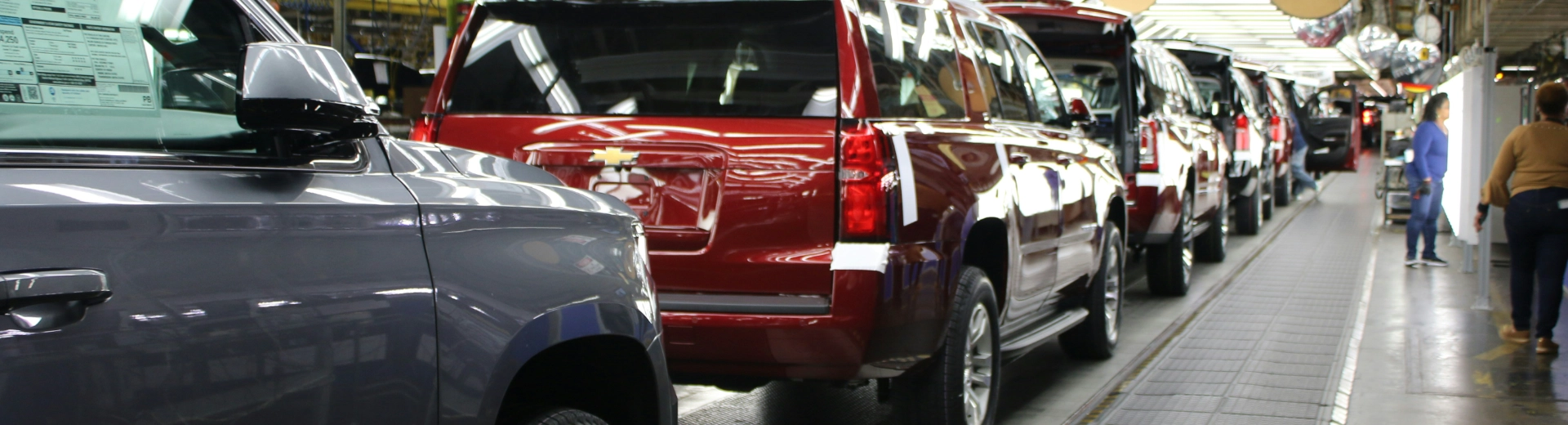
Automotive
TOP Prototype supports automotive engineering teams with precision-manufactured components for validation, testing, and production programs. We help reduce development risk while meeting demanding requirements for accuracy, durability, and consistency.
Typical Applications:
Powertrain · Chassis · Interior systems · EV components · Testing fixtures

Get Free Quote

Automotive
TOP Prototype supports automotive engineering teams with precision-manufactured components for validation, testing, and production programs. We help reduce development risk while meeting demanding requirements for accuracy, durability, and consistency.
Typical Applications:
Powertrain · Chassis · Interior systems · EV components · Testing fixtures
Get Free Quote
Manufacturing for Automotive Means Balancing Performance, Cost, and Scale
Automotive parts must perform reliably under mechanical stress, vibration, heat, and long-term use—often at tight cost targets and increasing production volumes.
Core Constraints for Part Development:

Strict Tolerance Requirements

High-Mix, Low-Volume Production

Material & Standard Compliance

Rapid Prototyping to Production Transition

Surface Finish & Functional Performance

Supply Chain & Lead Time Pressures
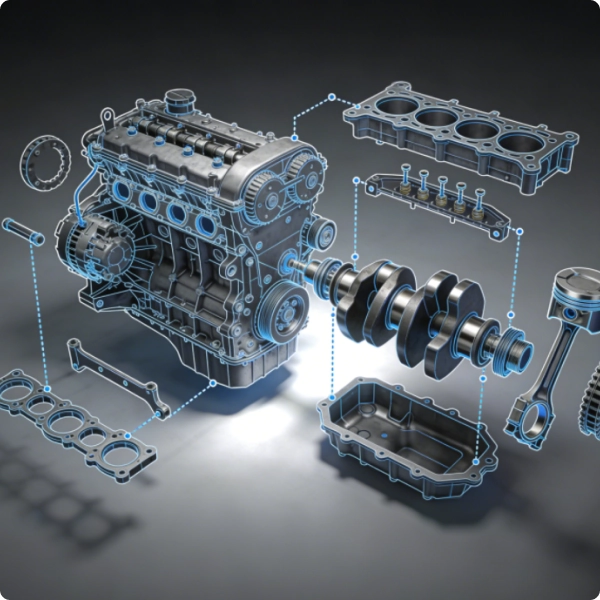

Engineering-Driven Support for Automotive Programs
Our end-to-end support aligns with automotive development workflows, from design validation to full production readiness.

Design to Manufacturing
-
Translate complex automotive designs into stable, manufacturable processes.
-
DFM analysis to reduce rework and manufacturing risk.
-
Processes aligned with assembly and tolerance requirements.

Precision & Materials
-
Apply precision only where functional performance demands.
-
Material selection based on heat, vibration, and stress conditions.
-
Compliance with automotive standards and specifications.
Iteration & Production Scale
-
Support fast prototype iteration during validation stages.
-
Prepare processes for smooth transition into production.
-
Maintain quality and cost control as volumes increase.
Automotive Parts We Manufacture
We manufacture a wide range of automotive components that support product development from early validation through production readiness. Our capabilities are focused on parts that require tight tolerances, reliable performance, and consistent quality under real operating conditions.
Typical automotive parts we produce include powertrain and drivetrain components, EV structural and functional parts, precision shafts and connectors, housings and enclosures, plastic interior components, and aftermarket or end-of-life replacement parts. Whether the goal is functional testing, assembly verification, or low-to-medium volume production, our manufacturing approach emphasizes accuracy where it matters, material suitability for automotive environments, and repeatable results across batches.

Transmission Gears & Bearing Components

EV Battery, Chassis & Suspension Components

Automotive Housings, Brackets & Covers

Precision Shafts, Bearings & Bushings

Automotive Interior Handles & Trim Components

Engine, Transmission & Suspension Replacement Parts
*These examples represent a portion of our automotive manufacturing work.
Many customer projects are subject to confidentiality—contact us to discuss your specific part requirements.


Manufacturing Processes for Automotive Parts
Different automotive components require different manufacturing approaches depending on function, material, and volume.
Commonly used processes include:
- CNC Machining - functional prototypes and precision components
- 5-Axis CNC Machining – complex geometries and tight assemblies
- Swiss Machining – high-precision shafts and connectors
- Injection Molding – plastic housings and interior components
- Sheet Metal Fabrication – brackets, frames, and enclosures
Process selection is driven by performance requirements — not convenience.
Request a Quote
Automotive Materials
Material selection is driven by part function, operating conditions, and production requirements.
| Aluminum Alloys | Steel & Stainless Steel | Engineering Plastics | High-Performance Plastics |
| Structural parts, housings, brackets | Shafts, load-bearing, under-hood | Shafts, load-bearing, under-hood | Interior parts, enclosures |


Aluminum 6061 / 7075
Lightweight metals widely used in automotive prototyping and production for their balance of strength, machinability, and corrosion resistance.
Typical Automotive Parts:
Structural brackets, housings, mounting frames, functional prototypes
Explore Materials


Why Choose TOP Prototype

Automotive Tolerance Expertise
Automotive tolerances are applied only where function, assembly, or durability requires them,avoiding unnecessary over-specification and cost inflation.

Certified Quality System
ISO 9001–certified manufacturing with IATF 16949–aligned processes ensures traceability, inspection control, and documentation suitable for automotive supply chains.

Prototype-to-Production
Prototypes are developed with production intent, ensuring processes, materials, and tolerances transition smoothly into low-volume and scaled automotive manufacturing.

High-Mix Automotive Capability
Our workflows support frequent design changes, multiple variants, and low-to-medium automotive volumes without compromising quality or delivery stability.

Broad Part Experience
Working across different part types allows smarter decisions on tolerance, finish, and process without unnecessary cost or complexity.

Engineering Responsiveness
Engineering and production teams respond quickly to design changes, schedule shifts, and iteration needs without disrupting quality or process stability.
Request a Quote
Automotive FAQs
-
What tolerance levels are typically achievable for automotive CNC parts?

-
For most automotive components, standard tolerances of ±0.05 mm are commonly achievable, with tighter tolerances applied only where function requires it. Critical interfaces, alignment features, or rotating components can be controlled to tighter limits based on design intent.
Actual tolerances depend on part geometry, material, and functional requirements rather than a fixed blanket standard.
If you require a more detailed explanation, please contact us.
-
Can CNC machining be used for both automotive prototyping and production parts?
-
Yes. CNC machining supports early-stage concept models, functional prototypes, testing components, production-intent parts, and low-volume production. It provides the accuracy, repeatability, and material performance required throughout automotive product development.
-
What materials are most commonly used for automotive CNC parts?
-
Common materials include aluminum alloys such as 6061-T6 and 6082-T6, stainless steel, carbon steel, zinc alloys, engineering plastics, ABS, PMMA, POM, and nylon. Material selection depends on strength, weight, heat resistance, corrosion resistance, appearance, and testing requirements.
-
How do you support the transition from prototype to production in automotive projects?
-
TOP Prototype supports the transition through design review, prototype machining, functional testing, material and process validation, tolerance optimization, rapid tooling, and low-volume manufacturing. Using production-intent materials and controlled processes helps reduce redesign risks before volume production.
-
Can you manufacture automotive parts under NDA or confidentiality requirements?
-
Confidentiality arrangements can be discussed before project files are submitted. TOP Prototype can work under an agreed NDA to help protect CAD data, drawings, technical specifications, product designs, and other confidential project information.
Customer Reviews

Salomon Alain Mpouma
June 3, 2022

Ms. Yael was very professional when assisting me with my case and helped lead me to find all the information I needed to move my case forward.

Bob Unger
March 22, 2023
Corey offered great customer support and service when dealing with my order. I didn’t know exactly what I needed and he made sure I understood what the difference in parts were.

Gerard Green
October 21, 2025
Ms. Yael was very professional when assisting me with my case and helped lead me to find all the information Ineeded to move my case forward.

Monica Segovia
February 10, 2026
Ms. Yael was very professional when assisting me with my case and helped lead me to find all the information I needed to move my case forward.

luke
June 8, 2024
i emailed them about changing to faster shipping, they made it very easy by calling me forward instead of emailing back and forth. fixed my shipping times for me and shipped same day. 5 star for customer service and quality of the part

Antoni 305
October 2, 2020
I had a very complex part to make for a prototype car that I am building for my son. No company wanted to take on this task until I found CNC fabrication. They performed the service quickly and professionally. I was very pleased.
Start Your Project Inquiry
Your information is kept confidential and reviewed directly by our engineering team. We typically respond within 1 business day with practical technical feedback.