


New Energy
We support new energy product development teams with precision-manufactured components for prototyping, validation, testing, and production programs. Our manufacturing capabilities help reduce development risk while meeting demanding requirements for accuracy, thermal performance, structural strength, electrical reliability, durability, and consistency.

Get Free Quote

New Energy
We support new energy product development teams with precision-manufactured components for prototyping, validation, testing, and production programs. Our manufacturing capabilities help reduce development risk while meeting demanding requirements for accuracy, thermal performance, structural strength, electrical reliability, durability, and consistency.
Get Free Quote
Manufacturing New Energy Components Requires More Than Dimensional Accuracy
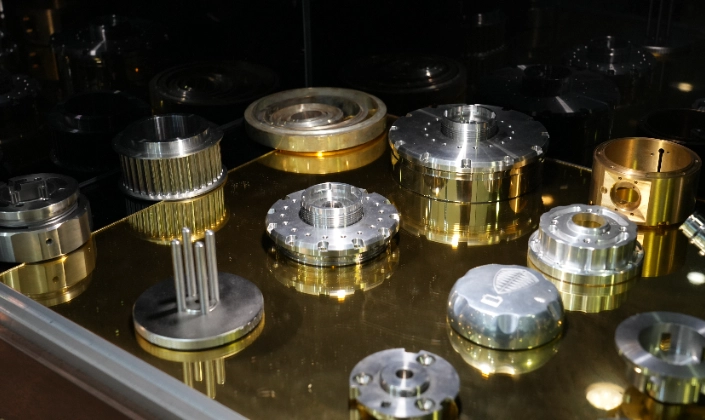
New energy components often combine structural, thermal, electrical, and environmental requirements within compact assemblies. Successful manufacturing depends on selecting the right material, process, tolerance strategy, and surface treatment for the operating conditions.
- Tight Tolerance Control
- Thermal Management
- Lightweight Structures
- Electrical Conductivity
- Insulation and Safety
- Production Consistency
New Energy Parts We Manufacture
We manufacture precision components for electric vehicles, energy storage, and charging systems, supporting prototypes, testing, low-volume production, and production-ready manufacturing.
Typical New Energy Parts:
EV Motor Housings
Motor End Covers
Battery Pack Housings
Battery Module End Plates
Battery Cooling Plates
Battery Tray Components
Inverter Housings
Power Controller Housings
On-Board Charger Housings
DC-DC Converter Housings
Heat Sinks & Thermal Management Parts
Charging Connector Housings
Charging Station Enclosures
Busbars & Conductive Components
Energy Storage System Enclosures
Mounting Brackets & Structural Frames


Engineering Support from Prototype to Production
Our engineering support helps new energy development teams move efficiently from initial design review to functional validation and scalable production. Each stage focuses on manufacturability, performance, quality, and process consistency.

Design to Manufacturing
-
Material and process selection
-
Tolerance and geometry optimization
-
Early manufacturability risk review

Prototype to Validation
-
Functional prototype manufacturing
-
Fit, assembly, and thermal testing
-
Rapid design iteration support
Validation to Production
-
Pilot and bridge production
-
Repeatable process development
-
Consistent batch quality control
Manufacturing Processes for New Energy Components
Different new energy components require different manufacturing methods based on material, geometry, precision, thermal performance, and production volume. The company’s documented capabilities include precision machining, low-volume production, rapid prototyping, 3D printing, sheet metal forming, rapid tooling, vacuum forming, and post-processing. Its new energy motor-cover case also demonstrates CNC machining of AL6082-T6 with a shaft-hole accuracy of +0.01 mm.


Turn Your New Energy Concept into a Production-Ready Component
From early prototypes and functional testing to low-volume and scalable production, our engineering team supports new energy projects at every stage. Share your drawings, materials, tolerance targets, surface specifications, and expected quantities. We will review manufacturability, recommend suitable processes, identify potential risks, and help improve quality, cost, and lead-time performance before production begins.
Request a Quote
Materials & Surface Finishes for New Energy Components
We support a wide range of metals and engineering plastics for electric vehicles, battery systems, charging equipment, power electronics, and energy-storage applications
Material Options:
| Material Category | Common Grades | Key Properties | Typical New Energy Applications |
| Aluminum | 6061-T6, 6082-T6, 7075-T6 | Lightweight, machinable, thermally conductive, corrosion-resistant | Motor housings, inverter enclosures, cooling plates, battery structures |
| Stainless Steel | 304, 316, 316L | Strong, durable, corrosion-resistant, temperature-resistant | Battery hardware, structural supports, shafts, connectors |
| Copper | C101, C110, C145 | High electrical and thermal conductivity | Busbars, terminals, conductive plates, heat-transfer components |
| Brass | C360, C377 | Good machinability, conductivity, and corrosion resistance | Charging connectors, terminals, threaded fittings |
| Zinc Alloy | Zamak 3, Zamak 5 | Good castability, dimensional stability, and surface quality | Connector housings, covers, brackets, functional prototypes |
| Magnesium Alloy | AZ31B, AZ91D | Very lightweight with good strength-to-weight performance | Lightweight housings, internal frames, structural components |
| Engineering Plastics | ABS, PC, POM, PA6, PA66 | Lightweight, impact-resistant, insulating, wear-resistant | Insulators, connectors, clips, covers, internal mechanisms |
| High-Performance Plastics | PEEK, PPS, PEI, PTFE | Heat-resistant, chemically stable, electrically insulating | High-voltage insulation, sensor parts, thermal and chemical barriers |
Surface Finish Options:
| Surface Finish | Suitable Materials | Key Benefits | Typical Requirements |
| Natural Anodizing | Aluminum | Improves corrosion resistance while maintaining a clean metallic appearance | Housings, cooling plates, structural components |
| Color Anodizing | Aluminum | Adds controlled color, corrosion protection, and surface durability | Enclosures, covers, visible exterior parts |
| Hard Anodizing | Aluminum | Provides increased hardness, wear resistance, and electrical insulation | High-contact and demanding functional surfaces |
| Chemical Conversion Coating | Aluminum | Improves corrosion resistance and coating adhesion | Conductive housings and pre-painted components |
| Passivation | Stainless steel | Enhances corrosion resistance without significantly changing dimensions | Precision hardware, shafts, fittings, brackets |
| Electroless Nickel Plating | Aluminum, steel, copper alloys | Provides uniform thickness, wear resistance, and corrosion protection | Complex parts and precision surfaces |
New Energy FAQs
-
What new energy components can you manufacture?

-
We manufacture motor housings, end covers, battery enclosures, cooling plates, inverter housings, charging-equipment components, brackets, conductive parts, and energy-storage structural components.
-
Which manufacturing processes are available?
-
Our capabilities include CNC machining, five-axis machining, CNC turning, precision grinding, sheet metal fabrication, 3D printing, rapid tooling, vacuum casting, and low-volume production.
-
Can you support new energy product prototyping?
-
Yes. We support rapid prototypes for appearance evaluation, dimensional verification, assembly testing, thermal testing, and functional validation before tooling or production.
-
What materials can be used for new energy components?
-
Available materials include aluminum alloys, stainless steel, copper, brass, zinc alloys, magnesium alloys, engineering plastics, and high-performance insulating plastics.
-
What machining accuracy can you achieve?
-
Accuracy depends on material, geometry, size, and inspection requirements. A documented AL6082-T6 new energy motor-cover project achieved a shaft-hole accuracy of +0.01 mm.
Start Your Project Inquiry
Your information is kept confidential and reviewed directly by our engineering team. We typically respond within 1 business day with practical technical feedback.