

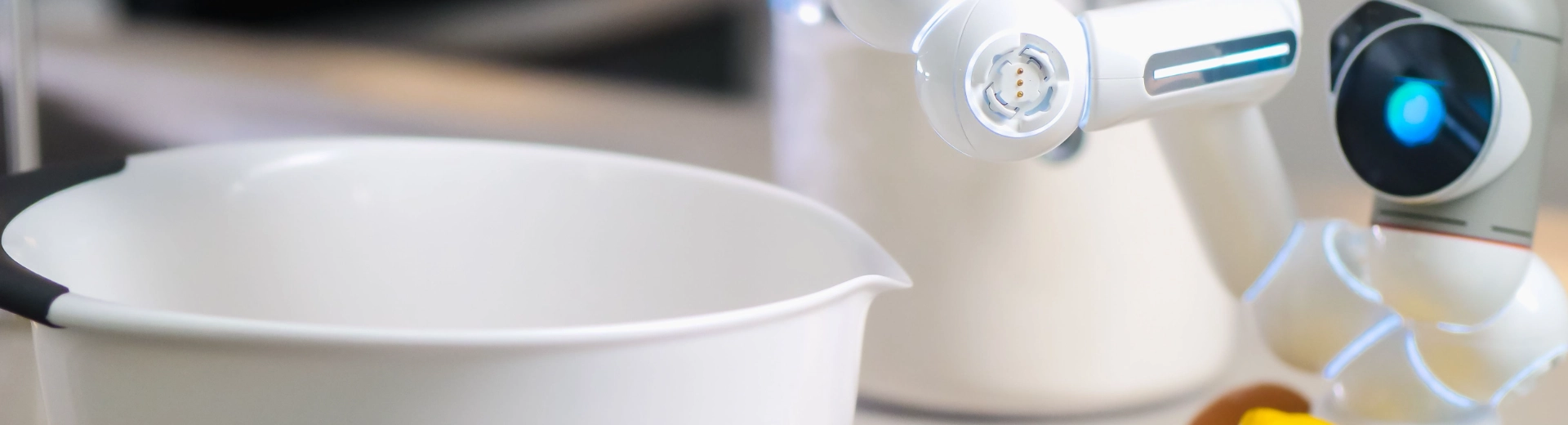
Robotics
We support robotics engineering teams with precision-manufactured components for prototyping, validation, testing, and production programs. Our manufacturing capabilities help reduce development risk while meeting demanding requirements for accuracy, durability, reliability, and consistency.

Get Free Quote

Robotics
We support robotics engineering teams with precision-manufactured components for prototyping, validation, testing, and production programs. Our manufacturing capabilities help reduce development risk while meeting demanding requirements for accuracy, durability, reliability, and consistency.
Get Free Quote
Our Manufacturing Capabilities
Robotic systems require components that combine precise motion, complex geometry, and structural reliability. We provide several manufacturing processes to support robotics projects from functional prototyping and engineering validation to low-volume and production manufacturing.
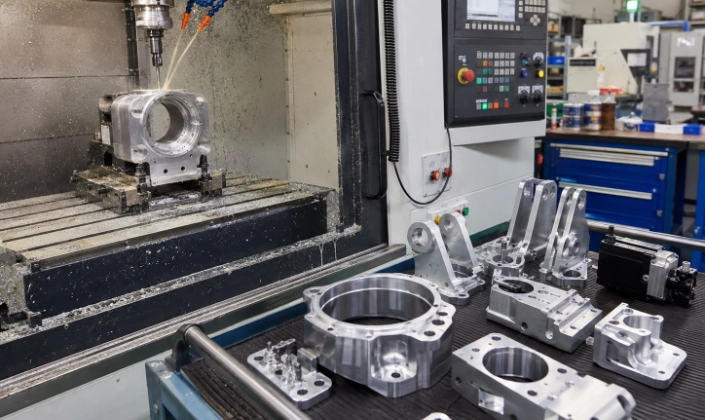
CNC Machining
CNC machining is widely used for robot joints, actuator housings, mounting plates, frames, and end-effectors. Our CNC machining capabilities can achieve precision down to ±0.02 mm while producing complex curved surfaces, difficult-to-access features, and intricate functional structures in metals and engineering plastics.
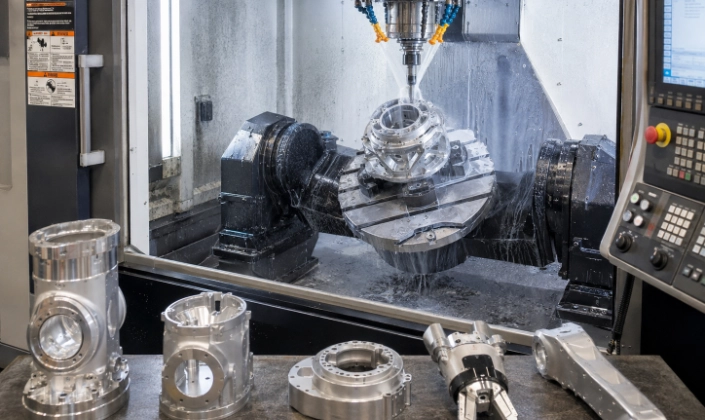
5-Axis CNC Machining
5-axis CNC machining is suitable for robotic components with compound angles, deep cavities, curved profiles, and features positioned on multiple surfaces. Our 5-axis capabilities can achieve machining accuracy of ±0.05 mm while reducing repeated setups and maintaining consistent positional accuracy across complex geometries.
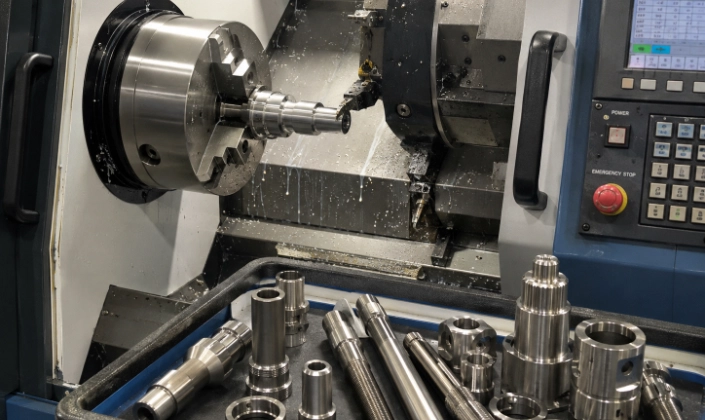
CNC Turning
CNC turning is commonly used for robot shafts, pins, bushings, rollers, spacers, and actuator components. Our turning capabilities support stepped diameters, precision threads, grooves, deep bores, and thin-wall rotational parts with tight control of concentricity, roundness, and surface finish.
Sheet Metal Processing
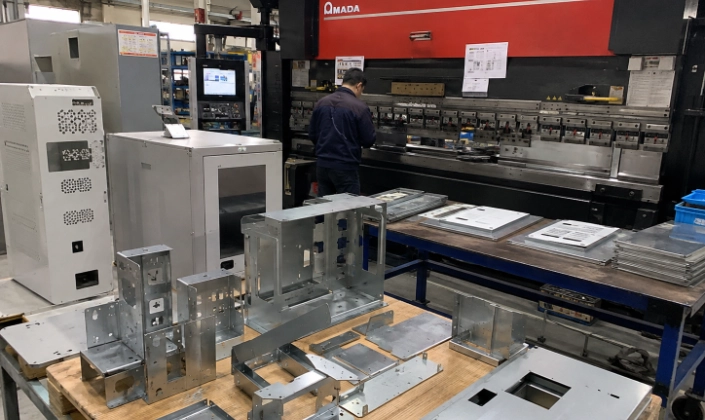
Sheet metal processing is used to manufacture robotic frames, protective covers, brackets, control cabinets, and equipment enclosures. Our capabilities integrate laser cutting, precision bending, welding, and surface finishing to produce large-format, lightweight, and structurally stable assemblies with accurate hole and bend positioning.
3D Printing
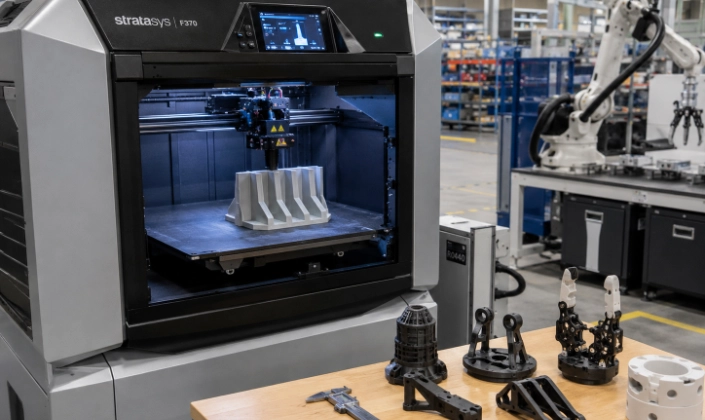
3D printing enables the rapid production of custom grippers, sensor mounts, cable guides, housings, and functional robot prototypes. Our additive manufacturing capabilities support internal channels, lattice structures, undercuts, and integrated geometries that are difficult to produce through conventional machining.
Precision-Machined Components for Robotics
Our manufacturing capabilities encompass complex geometries, high-precision interfaces, lightweight structures, and motion-critical components.
Core Constraints for Part Development:
Robot Joints
Actuator Housings
Gearbox Housings
Motor Mounts
End-Effector Components
Robotic Gripper Jaws
Linkage Arms
Drive Shafts
Bearing Housings
Sensor Mounts
Mounting Plates
Cable Management Parts
Control Enclosures
Structural Frames


Launch Your Manufacturing Project
Need the right process for your Robotics components? Send us your drawings, material requirements, tolerances, surface finishes, and production volume. Our engineering team will review your project, recommend the most suitable manufacturing solution, and support you from functional prototypes to production-ready parts.
Request a Quote
Materials for Robotic Components
We machine a wide range of metals and engineering plastics to meet the requirements of robotic systems for lightweight design, structural strength, wear resistance, dimensional stability, and electrical performance.
| Material | Common Grades | Key Advantages | Typical Robotic Applications |
| Aluminum Alloy | 6061, 6082, 7075, 5052 | Lightweight, machinable, corrosion-resistant, good strength-to-weight ratio | Robot arms, joint housings, mounting plates, actuator housings, end-effectors |
| Stainless Steel | 303, 304, 316, 17-4PH | Corrosion-resistant, durable, hygienic, high mechanical strength | Shafts, gripper components, fasteners, sensor housings, medical robot parts |
| Carbon and Alloy Steel | 1018, 1045, 4130, 4140 | High strength, wear resistance, good fatigue performance | Drive shafts, gears, pins, linkages, structural and load-bearing parts |
| Titanium Alloy | Grade 2, Grade 5 | High strength-to-weight ratio, corrosion-resistant, lightweight | Lightweight robot arms, high-load joints, aerospace and medical robotic parts |
| Copper and Brass | C110, C360 | Excellent electrical and thermal conductivity, good machinability | Electrical contacts, connectors, heat-transfer parts, bushings and terminals |
| Engineering Plastics | POM, PA, PC, ABS, PEEK, PTFE | Lightweight, insulating, low-friction, wear-resistant | Gears, cable guides, covers, sensor mounts, insulating parts and wear pads |
| Magnesium Alloy | AZ31, AZ91D | Very low weight, good machinability, suitable for lightweight structures | Portable robot housings, drone components, lightweight frames and covers |
Surface Treatments for Robotic Components
Anodizing
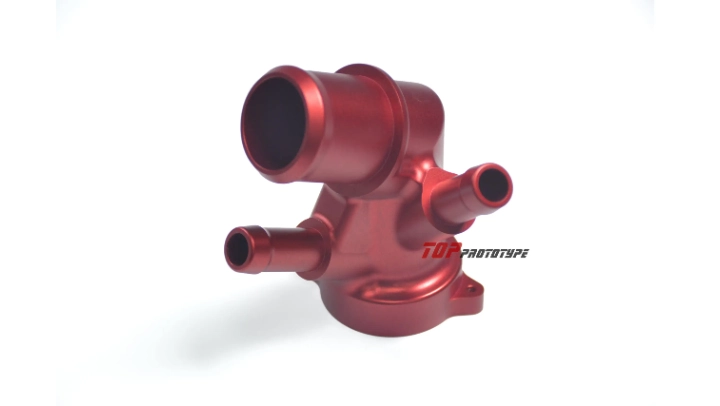
A durable surface treatment for aluminum parts that improves corrosion resistance, wear performance, and appearance. It is available in natural, black, and custom colors.
Hard Anodizing
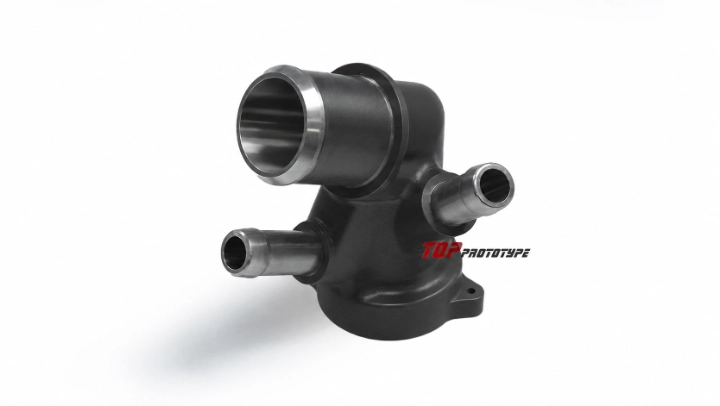
Hard anodizing creates a thicker, more wear-resistant oxide layer for aluminum components exposed to repeated motion, friction, or demanding operating conditions.

Electroless Nickel Plating
Electroless nickel plating provides uniform coverage on complex geometries while improving corrosion resistance, hardness, and dimensional stability.
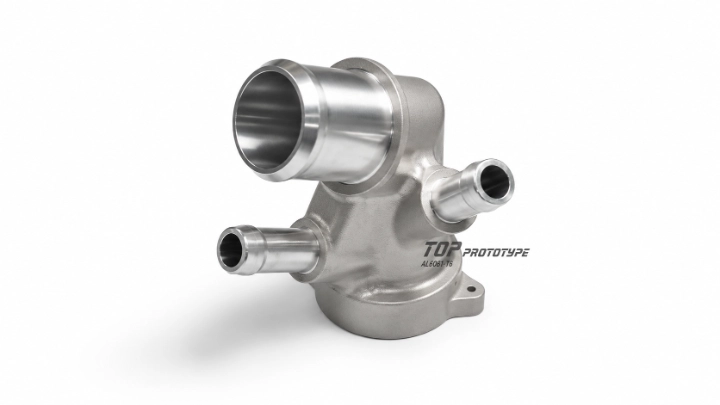
Passivation
Passivation removes surface contaminants from stainless steel and strengthens its natural corrosion-resistant layer without significantly changing part dimensions.

Black Oxide
Black oxide provides steel components with a dark, low-reflective finish and basic corrosion protection while maintaining critical dimensions.
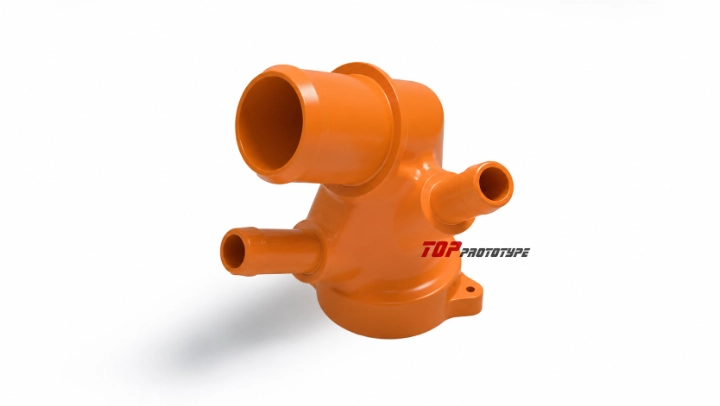
Powder Coating
Powder coating creates a durable and visually consistent protective layer with good resistance to impact, scratching, and environmental exposure.
Request a Quote
Robotics FAQs
-
What robotic components can you manufacture?

-
We manufacture robot joints, actuator housings, shafts, mounting plates, linkage arms, gripper components, sensor brackets, control enclosures, structural frames, bushings, and other custom precision parts.
-
Which manufacturing processes are available for robotics projects?
-
Our capabilities include CNC machining, CNC turning, 5-axis CNC machining, sheet metal processing, injection molding, vacuum casting, die casting, and 3D printing.
-
What machining accuracy can you achieve?
-
Depending on the material, geometry, and part size, our CNC machining capabilities can achieve tolerances down to ±0.02 mm. Critical dimensions are reviewed before production.
-
Can you manufacture complex robotic components?
-
Yes. We can machine compound angles, curved surfaces, deep cavities, multi-sided features, precision bores, and difficult-to-access structures using multi-axis CNC equipment.
-
What materials are commonly used for robotic parts?
-
Common materials include aluminum 6061 and 7075, stainless steel, carbon steel, alloy steel, titanium, copper, brass, POM, nylon, PEEK, ABS, and polycarbonate.
-
Which surface treatments are available?
-
We provide anodizing, hard anodizing, electroless nickel plating, passivation, black oxide, powder coating, bead blasting, polishing, painting, and other custom finishes.
-
How do you select a suitable surface treatment?
-
The selection depends on the base material and requirements for wear resistance, corrosion protection, friction, electrical conductivity, cleanliness, appearance, and dimensional control.
-
Can you support both robotic prototypes and production parts?
-
Yes. We support rapid prototypes, functional testing parts, engineering validation units, low-volume production, and repeat production according to project requirements.
Start Your Project Inquiry
Your information is kept confidential and reviewed directly by our engineering team. We typically respond within 1 business day with practical technical feedback.