

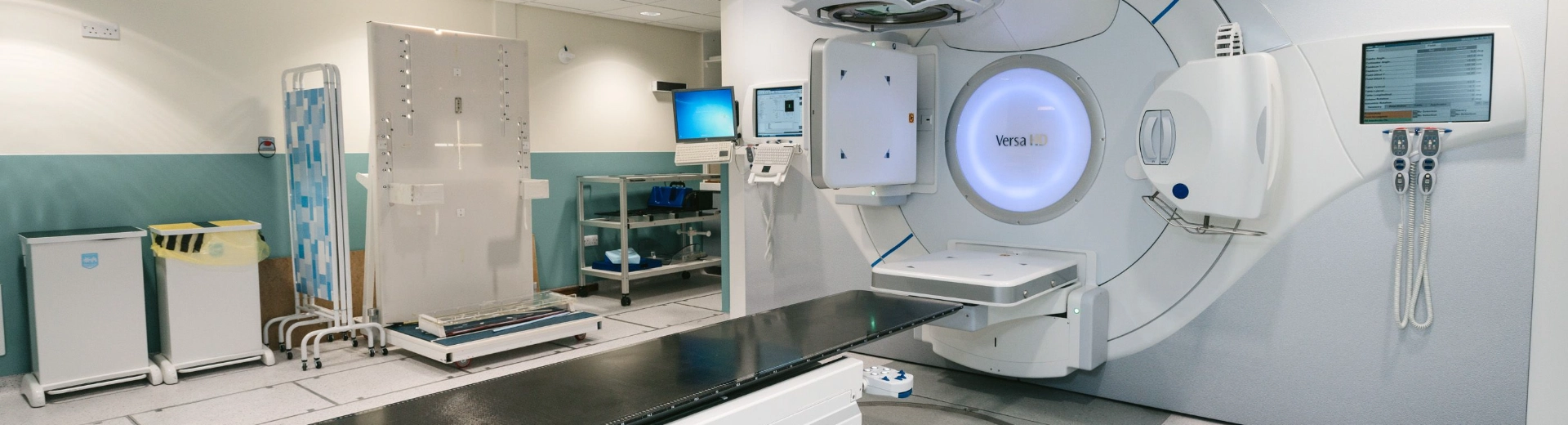
Medical Equipment
We support medical device engineering teams with precision-manufactured components for prototyping, validation, testing, and production programs. Our capabilities help reduce development risk while meeting strict requirements for accuracy, reliability, cleanliness, durability, and consistency.

Get Free Quote

Medical Equipment
We support medical device engineering teams with precision-manufactured components for prototyping, validation, testing, and production programs. Our capabilities help reduce development risk while meeting strict requirements for accuracy, reliability, cleanliness, durability, and consistency.
Get Free Quote

Engineering-Driven Support for Medical Device Programs
Our end-to-end manufacturing support aligns with medical device development workflows, from design validation and functional testing to process optimization and production readiness.

Design to Manufacturing
-
Optimize complex medical component designs for stable and efficient manufacturing.
-
Maintain critical dimensions, tolerances, and assembly interfaces.
-
Preserve functional intent throughout prototyping and production.

Precision and Consistency
-
Maintain tight tolerances across critical medical component features.
-
Control surface finishes for reliable assembly and performance.
-
Deliver consistent quality across prototypes and production batches.
Prototype to Production
-
Support rapid iterations and functional prototype development.
-
Validate materials, dimensions, and manufacturing processes before production.
-
Transition efficiently from pilot builds to low-volume manufacturing.
Medical Components We Manufacture
We manufacture a wide range of medical device components, supporting product development from early design validation and functional testing to pilot production and manufacturing readiness. Our capabilities focus on precision parts that require dimensional accuracy, assembly consistency, material stability, and controlled surface quality.
Whether the project involves functional testing, assembly verification, preclinical device development, or low-to-medium-volume production, our manufacturing approach emphasizes critical dimensions, mating interfaces, suitable material selection, and repeatable quality across production batches.


Manufacturing Processes for Medical Parts
Request a Quote
Medical Equipment Materials
Material and surface finish selection is driven by part function, operating conditions, sterilization requirements, and production needs.
Medical Device Materials
| Material | Common Grades | Key Properties | Typical Medical Applications |
| Stainless Steel | 303, 304, 316L, 17-4 PH | Corrosion-resistant, durable, sterilization-compatible | Surgical instrument parts, fittings, shafts, equipment components |
| Titanium Alloys | Grade 2, Grade 5 Ti-6Al-4V | Lightweight, high strength, corrosion-resistant | Surgical tools, device structures, specialized medical components |
| Aluminum Alloys | 6061-T6, 6082-T6, 7075-T6 | Lightweight, machinable, suitable for protective finishes | Diagnostic equipment frames, housings, brackets, fixtures |
| Engineering Plastics | PEEK, POM, PC, PEI, PA | Lightweight, insulating, chemically resistant | Guides, insulators, manifolds, housings, instrument components |
| Transparent Plastics | PMMA, PC | Optical clarity, impact resistance, easy fabrication | Viewing windows, fluid inspection parts, transparent covers |
| Copper and Brass | C101, C110, C360 | Electrical and thermal conductivity, machinability | Electrical contacts, connectors, thermal-control components |
| Silicone and Elastomers | Medical-grade silicone, TPU | Flexible, sealing capability, chemical resistance | Seals, gaskets, tubing components, flexible interfaces |
Medical Component Surface Finishes
| Surface Treatment | Suitable Materials | Main Benefits | Typical Applications |
| Passivation | Stainless steel | Improves corrosion resistance and removes free-iron contamination | Surgical instrument parts, fittings, fluid-handling components |
| Electropolishing | Stainless steel | Reduces surface roughness and improves cleanability | Fluid-contact parts, instrument components, hygienic surfaces |
| Anodizing | Aluminum | Improves corrosion resistance, wear resistance, and appearance | Equipment housings, frames, brackets, control panels |
| Hard Anodizing | Aluminum | Produces a harder and more wear-resistant surface | Sliding components, fixtures, high-use equipment parts |
| Bead Blasting | Aluminum, stainless steel | Creates a uniform matte surface and reduces visible machining marks | Housings, handles, panels, instrument bodies |
| Polishing | Stainless steel, aluminum, plastics | Improves smoothness, appearance, and cleanability | Visible components, fluid-contact parts, instrument surfaces |
| Powder Coating | Aluminum, steel | Provides durable color and environmental protection | Medical equipment frames, enclosures, carts, brackets |
| Painting | Metals and plastics | Supports color matching, labeling, and surface protection | Diagnostic equipment housings, prototypes, control panels |
| Laser Engraving | Metals and plastics | Provides permanent identification and traceability | Serial numbers, scales, part codes, operating markings |
| PVD Coating | Stainless steel, titanium | Improves wear resistance, hardness, and surface appearance | Surgical instrument components and high-wear precision parts |
Medical Equipment FAQs
-
What medical equipment components can TOP Prototype manufacture?

-
TOP Prototype can manufacture diagnostic equipment components, surgical instrument parts, fluid-control components, precision shafts, connectors, housings, mounting brackets, testing fixtures, and low-volume replacement parts.
-
Can you support both medical prototypes and production components?
-
Yes. We support appearance models, functional prototypes, assembly-validation parts, engineering test components, pilot builds, and low-to-medium-volume production.
-
Which manufacturing processes are available for medical projects?
-
Available processes include CNC machining, CNC milling, CNC turning, 5-axis CNC machining, sheet metal fabrication, injection molding, vacuum casting, and 3D printing.
-
What materials are commonly used for medical equipment components?
-
Common options include stainless steel, aluminum alloys, titanium, copper alloys, silicone, and engineering plastics such as PEEK, POM, PC, PEI, PA, and PMMA. Final selection depends on the component’s function and operating environment.
-
What tolerances can be achieved for medical parts?
-
Tolerance capability depends on the material, geometry, part size, and critical features. Tighter tolerances can be applied to sealing surfaces, fluid channels, locating features, bearing interfaces, and precision assemblies following drawing review.
-
Can you manufacture complex medical component geometries?
-
Yes. Multi-axis CNC machining can produce complex contours, angled holes, deep cavities, thin-wall structures, internal flow paths, and components requiring machining from multiple directions.
Start Your Project Inquiry
Your information is kept confidential and reviewed directly by our engineering team. We typically respond within 1 business day with practical technical feedback.