




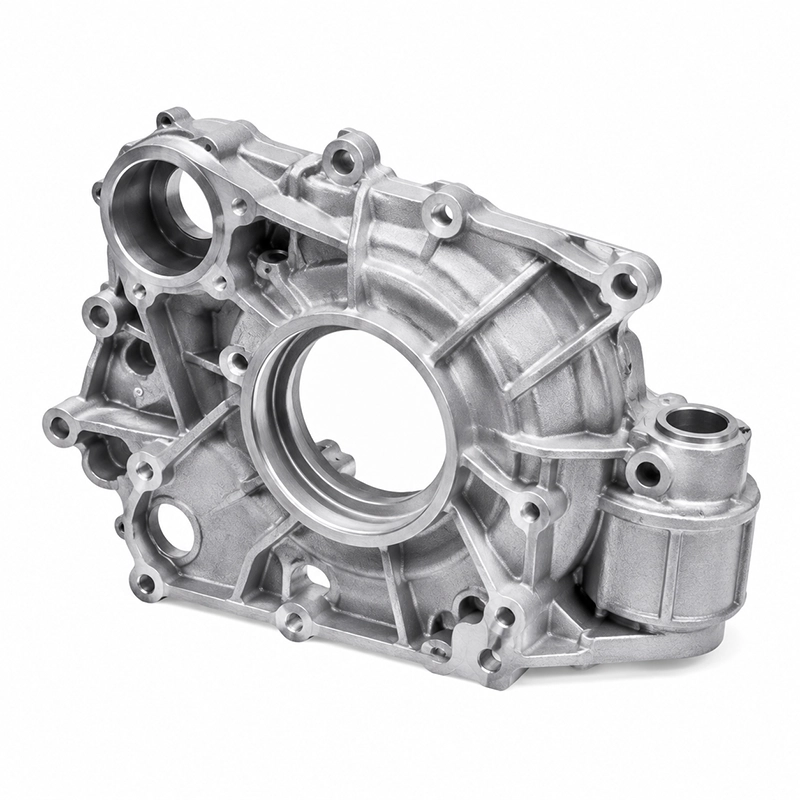

Die Cast Automotive Components
Automotive die cast parts can combine mounting points, structural walls, and shaped cavities in a single casting rather than relying on several assembled pieces. Custom automotive die cast parts can be developed around the geometry of a vehicle-related mechanical assembly, including fastening locations and clearance areas.
Quick Info:
- Material: Aluminum Alloy / Zinc Alloy
- Process: High Pressure Die Casting
- Wall Thickness: 1.5–5.0 mm
- Dimensional Tolerance: ±0.10–0.30 mm
- Surface Finish: Shot Blasting / Machining / Coating
- Lead Time: 15–30 Working Days

Get Free Quote


Detailed Description
Automotive die cast parts form complex metal supports, housings and attachment structures used around vehicle systems. Examples include small sensor cases, powertrain covers, motor supports and electronics mounting frames. Cast ribs connect load paths across the part while bosses and flange regions position fasteners at assembly interfaces.
Aluminum alloys often suit larger weight-sensitive housings; zinc alloys can serve compact parts with fine detail requirements. Selection depends on the required geometry and operating conditions rather than one universal material preference.
Available Surface Finishes
- Shot Blasting: Removes casting marks and creates a uniform surface appearance.
- Machining: Provides precision surfaces, holes and threaded features.
- Powder Coating: Improves corrosion resistance and appearance.
- Anodizing: Available for selected aluminum components.
- Electroplating: Suitable for zinc alloy parts requiring enhanced surface protection.
Thin walls and local reinforcement can share the same casting, but the design needs appropriate draft, filling paths and allowance for subsequent machining. Flat sealing faces, threads and close-location holes may need finishing after the casting leaves the tool.
Structural & Functional Breakdown
- Lightweight Structural Design: Reduces vehicle component weight while maintaining strength.
- Integrated Mounting Features: Bosses, ribs and brackets can be cast directly.
- Precision Assembly Interfaces: Machined surfaces improve component fit.
- Thin Wall Structures: Reduce material usage and overall weight.
- Heat Dissipation Features: Aluminum alloys support thermal management requirements.
Surface treatments can address appearance or environmental exposure. The choice of blasting, coating, anodizing or plating must be checked against alloy compatibility and the assembly specification.
Key Features
- Lightweight Metal Construction: Aluminum alloys provide strength with reduced weight.
- Complex Geometries: Multiple ribs, bosses and mounting structures can be integrated into one casting.
- Repeatable Production: Die casting supports recurring automotive production volumes.
- Secondary Machining Capability: Critical surfaces can be finished after casting.
- Material Flexibility: Aluminum and zinc alloys support different automotive requirements.
- Prototype to Production Support: Suitable for development samples and long-term manufacturing.
On an electric-drive mounting frame, automotive die cast parts may place cable-clearance features next to reinforced bolt pads without adding separate brackets. A cast enclosure can also support sensor protection if its joint geometry and mounting points match the surrounding hardware.
Applications
- Automotive Brackets
- EV Components
- Motor Mounts
- Sensor Housings
- Transmission Components
- Battery System Components
- Vehicle Structural Parts
- Automotive Electronics
Structural performance, thermal behavior and durability depend on the actual part design, alloy condition, casting quality and testing. A sample fitting correctly in a vehicle assembly does not by itself establish automotive qualification.

Frequently Asked Questions
-
Can automotive die casting combine thin walls and mounting bosses?

-
Yes. Tooling can form local ribs, bosses and thin sections together, subject to fill behavior and wall-thickness constraints.
-
When should aluminum or zinc alloys be considered?
-
Aluminum often suits larger weight-sensitive housings, while zinc can serve smaller intricate components. Final selection depends on requirements and available casting grades.
-
Why machine some interfaces after casting?
-
Secondary machining can control thread geometry, flat datum surfaces or tightly located holes used in vehicle assembly.
-
Can die cast parts be used for EV electrical components?
-
Some housings, brackets and mounts suit electric-drive and electronics assemblies. Electrical, thermal and sealing requirements still need part-specific testing.
-
Which surface finishes apply to vehicle components?
-
Blasting, machining, painting, powder coating and selected alloy-compatible treatments may be appropriate depending on the application.
-
Can a casting integrate several mounting functions?
-
A suitable geometry can include ribs, flanges and fastening bosses in one part, reducing separate attachment pieces.
-
How should tolerances be identified?
-
Mark critical datum surfaces, hole positions, mating faces and thread details on the drawing for review.
-
Does a die cast sample establish production approval?
-
No. Qualification may require dimensional, mechanical, environmental and process testing defined by the vehicle program.
-
What files support an automotive casting review?
-
Supply 3D CAD, a 2D drawing with critical dimensions, alloy requirements, surface conditions and the planned assembly context.


