




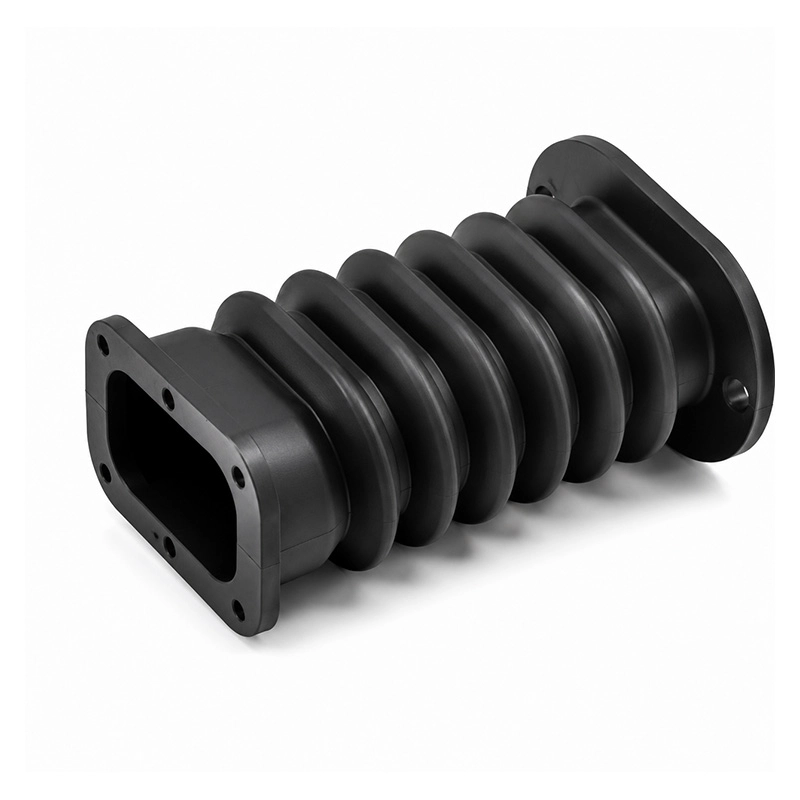

Vacuum Cast Silicone Rubber Parts
Vacuum cast rubber parts reproduce flexible profiles, sealing edges, and tactile surfaces using silicone rubber materials with selectable hardness. The process accommodates detailed contours that may be needed in protective covers, seals, and other deformable parts. Designers can assess compression, handling, and fit in a physical assembly while comparing different material responses. Small production quantities also make it possible to review these features before moving to a different manufacturing process.
Quick Info:
- Material: Silicone / Soft PU
- Process: Vacuum Casting
- Hardness Range: Shore A 20–90
- Wall Thickness: 1.5–8.0 mm
- Dimensional Tolerance: ±0.3–0.5 mm
- Lead Time: 5–12 Working Days

Get Free Quote


Detailed Description
Vacuum cast rubber parts can represent soft interfaces where rigid plastic would not provide the required contact or movement. Examples include protective end covers, grips, flexible buttons and gasket-like shapes. Curved sealing lips, textured contact areas and thin flexible walls can form part of a single cast geometry.
A grip sleeve needs to stretch or compress during installation, while a gasket needs a defined contact face around its perimeter. These different tasks call for separate decisions about hardness, wall shape and material. The reference covers silicone and rubber-like options; the actual casting formulation must be confirmed before treating their chemical properties as interchangeable.
Available Surface Finishes
- Smooth Silicone Finish: Provides clean functional surfaces.
- Texture Finish: Adds grip and improves tactile performance.
- Color Matching: Supports customized silicone appearance.
- Matte Finish: Reduces surface reflections.
- Gloss Finish: Available for specific cosmetic applications.
Silicone tooling can reproduce small grooves and undercuts from a suitable master pattern. On a soft cover, this allows the outer texture and inner retaining lip to be evaluated together rather than as separate pieces.
Structural & Functional Breakdown
- Flexible Structures: Supports bending, compression and deformation.
- Soft-Touch Surfaces: Improves user interaction and ergonomic performance.
- Sealing Features: Supports gaskets and protective sealing components.
- Elastic Components: Suitable for repeated compression and movement.
- Complex Flexible Geometry: Silicone molds reproduce detailed shapes.
Color and matte or gloss finish may affect the visual sample, but surface texture also changes how a part feels in the hand. Inspection should include both dimensions and the deformation needed to install it.
Key Features
- Adjustable Hardness: Different silicone and elastomer materials support various flexibility requirements.
- Flexible Material Behavior: Suitable for soft, elastic and impact-absorbing components.
- Complex Geometry Replication: Undercuts and deformable structures can be reproduced.
- Fine Detail Reproduction: Surface textures, grooves and small features can be transferred from master models.
- Low-Volume Production: Suitable for repeated functional samples without hard tooling.
- Color & Texture Flexibility: Supports customized appearance and ergonomic validation.
Vacuum cast rubber parts help test whether a flexible button returns after compression or whether a sealing edge contacts the mating housing. Those preliminary trials cannot replace cycle-life, ingress-protection or chemical-compatibility testing under final operating conditions.
Applications
- Medical Devices
- Consumer Products
- Wearable Equipment
- Sealing Components
- Protective Covers
- Automotive Interior Parts
- Electronic Accessories
Part geometry, cure behavior and hardness selection influence results across a small batch. Drawings should mark the surfaces that must deform, seal or retain the part so material options can be assessed against the intended use.

Frequently Asked Questions
-
Can flexible buttons and sealing lips be cast in one part?

-
They can be included in a single geometry when mold release, wall thickness and material flexibility permit the design.
-
Can the hardness of the cast part be adjusted?
-
Different formulations can offer different hardness ranges. A requested Shore hardness should be reviewed against the available casting material.
-
Do rubber-like polyurethane and silicone have identical properties?
-
No. They can differ in tear resistance, chemical response, aging and temperature behavior. The exact material needs confirmation for the intended conditions.
-
Can a cast gasket establish an IP waterproof rating?
-
A cast gasket can support early fit and compression checks. An IP rating applies only after testing the complete assembly under the relevant standard.
-
Are undercuts and fine grooves possible?
-
Flexible molds can reproduce many undercuts and detailed grooves. Extremely delicate features require a mold-release and durability review.
-
What surface finishes suit soft-touch grips?
-
Smooth, textured, matte and gloss appearances may be available, depending on the material and master finish.
-
Can several colors be reviewed in a sample batch?
-
Color options can be assessed, subject to available materials and the level of color matching required.
-
How is repeated compression evaluated?
-
Use the sample in the intended assembly and measure deformation and recovery. Long-cycle performance requires dedicated testing.
-
Which drawing details matter for a seal-like component?
-
Mark contact width, compression space, wall thickness, groove placement and the mating surface geometry.


