




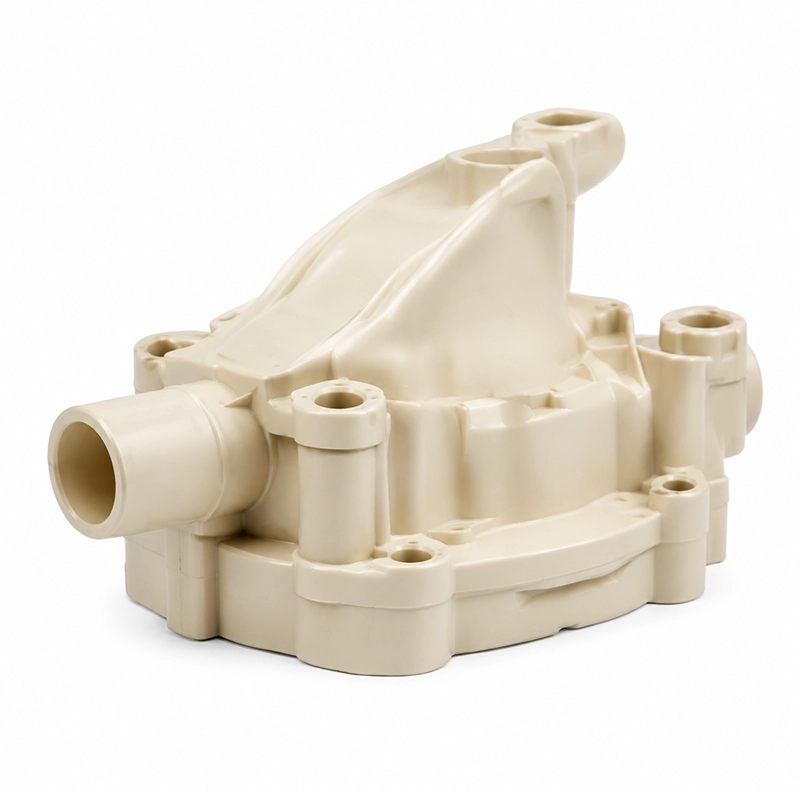

Vacuum Cast Engineering Plastic Components
Vacuum cast plastic prototypes made with polyurethane materials can reproduce detailed shapes and surface features from a master pattern. Their material characteristics can be selected to suit different functional or appearance requirements. This approach is particularly useful for checking assembly behavior, presenting product designs, and producing small batches of representative components before larger manufacturing commitments are made.
Quick Info:
- Material: ABS-like / PC-like / Nylon-like Resin
- Process: Vacuum Casting
- Wall Thickness: 1.5–6.0 mm
- Dimensional Tolerance: ±0.2–0.5 mm
- Surface Finish: Machined Texture / Painting / Coating
- Lead Time: 5–15 Working Days

Get Free Quote


Detailed Description
Vacuum cast plastic prototypes reproduce complex polymer components using a master pattern, a silicone mold and selected polyurethane casting materials. Examples include control housings, mechanical covers, positioning blocks and small enclosure parts that need to resemble molded production geometry during a pilot build.
The master defines the shape that the mold captures. Ribs, screw bosses, undercuts and visible textures can transfer into repeated castings, although mold design still needs suitable parting lines and release access. Polyurethane formulations can imitate some features of ABS-, PC- or nylon-like materials; they do not automatically match every property of the eventual resin.
Available Surface Finishes
- As-Cast Finish: Suitable for functional prototypes.
- Painting: Provides production-like appearance.
- Texture Finish: Simulates injection molded textures.
- Polishing: Improves cosmetic surfaces.
- Coating: Adds additional protection or appearance effects.
When several assemblies need the same enclosure geometry, a silicone tool can produce multiple examples from one approved pattern. This provides a way to check part-to-part fit, hardware placement and surface appearance before committing to an injection mold.
Structural & Functional Breakdown
- Reinforced Structures: Supports stronger prototype components.
- Mounting Features: Enables assembly testing.
- Complex Internal Geometry: Reproduces production-like designs.
- Surface Texture Transfer: Matches final product appearance.
- Functional Interfaces: Supports fit and compatibility verification.
Finish selection should follow the intended inspection. An as-cast part may work for fit evaluation, while painting or texture treatment can show how an exposed housing might look. Coatings may affect close-fitting joints.
Key Features
- Engineering Material Simulation: Replicates ABS, PC and nylon-like behaviors.
- Functional Prototype Performance: Supports mechanical and assembly testing.
- Low-Volume Manufacturing: Suitable for bridge production before injection molding.
- Complex Part Replication: Silicone molds capture detailed geometries.
- Reduced Development Cost: Avoids early investment in production tooling.
- Short Production Cycles: Supports early design verification.
Vacuum cast plastic prototypes can include reinforced fastening areas next to thin surrounding walls, allowing testers to check whether screws reach the intended hardware without altering the external profile.
Applications
- Industrial Equipment
- Electronics
- Automotive Development
- Robotics
- Consumer Products
- Engineering Validation
- Low-Volume Manufacturing
Casting shrinkage, air management, mold wear and formulation choice affect dimensions and appearance. For critical features, compare sample measurements with the drawing rather than assuming exact equivalence to injection-molded production parts. A ribbed electronics enclosure can be replicated for several team members to inspect simultaneously. The individual castings provide samples for fastener access, color checks and packaging evaluation while the production design continues to evolve.

Frequently Asked Questions
-
Can vacuum casting reproduce ribs and screw bosses?

-
Silicone molds can reproduce many rib, boss and mounting geometries captured in a properly designed master pattern. Release paths and local wall thickness still need review.
-
Does a polyurethane casting match ABS or nylon exactly?
-
No. Selected formulations may resemble certain properties, but heat response, stiffness, impact behavior and aging can differ from the eventual molded polymer.
-
What is the role of the master pattern?
-
The master establishes the surface shape and detailed features transferred into the silicone mold. Its finish and dimensional quality affect the resulting castings.
-
Can the same mold support several pilot units?
-
A silicone mold can produce a limited series of parts. Mold life varies with geometry, resin, processing and the finish standard.
-
Are textured outer surfaces possible?
-
Texture can be transferred from the master into the mold. The expected finish should be defined before making the pattern.
-
What affects dimensions on thin-walled castings?
-
Wall geometry, polyurethane shrinkage, mold flexibility and post-curing conditions can influence finished dimensions.
-
Can inserts or fastening details be checked in cast parts?
-
Mounting features can be cast for assembly trials. Any hardware insert approach should be reviewed against the material and mold geometry.
-
What files support a small vacuum-casting order?
-
Provide a 3D CAD model, marked critical dimensions, required properties, surface finish and approximate part quantity.
-
When is injection molding still necessary?
-
Production-tool and final-resin validation remain necessary when requirements depend on molded material properties, mold flow or long-term production consistency.


