




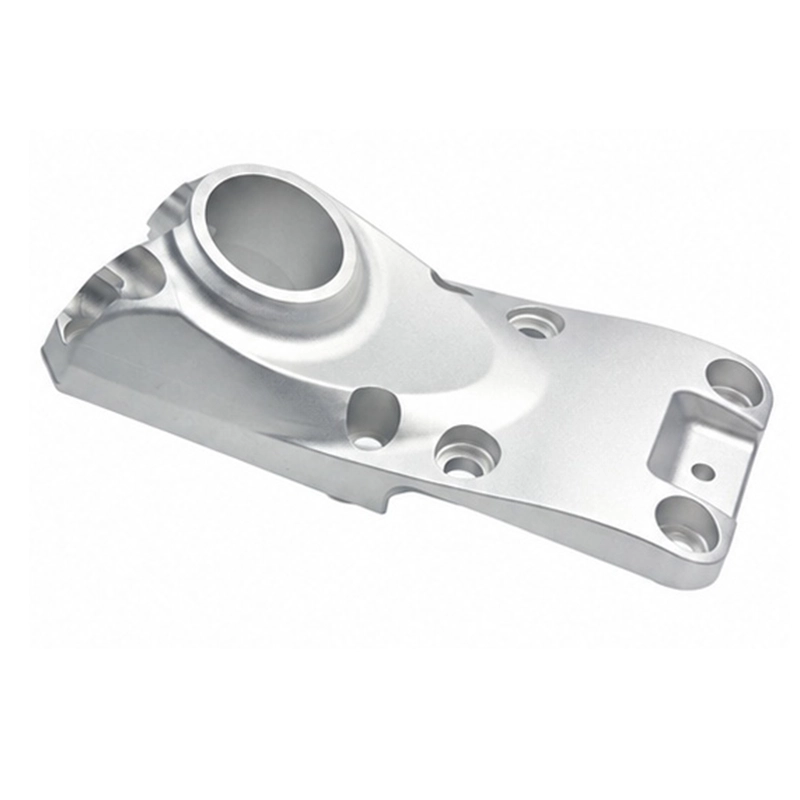

Precision CNC Machined Aluminum Mounting Plates
Precision machined aluminum mounting plates include hole patterns, datum surfaces, threaded features, and slots arranged to suit the equipment layout. These details support the placement of brackets, mechanisms, and other hardware in automation or industrial machinery. CNC machining allows the relevant faces and openings to be produced within one plate, helping establish the positional relationships needed by the adjoining components.
Quick Info:
- Material: Aluminum 6061 / 6082 / 7075
- Process: CNC Milling / Drilling / Reaming / Tapping
- Tolerance: ±0.02–0.05 mm
- Surface Finish: Anodizing / Bead Blasting / As-Machined
- MOQ: 1 Piece
- Lead Time: 5–12 Working Days

Get Free Quote


Detailed Description
Equipment assemblies become easier to organize when motors, sensors and actuators share a clear reference plane. Machined aluminum mounting plates provide that plane together with a coordinated pattern of tapped holes, dowel seats and fastener recesses. One plate can carry different components at fixed locations without separate adapters between every connection.
Milled reference edges and shallow locating pockets establish positions across the surface. Counterbored or countersunk holes allow fastening hardware to sit below or level with the top face, leaving neighboring equipment unobstructed. Slots permit adjustment along a defined travel direction while nearby dowels preserve other fixed positions.
Hole Grids, Datum Edges And Flush Fasteners
Machined aluminum mounting plates emphasize the relationship between features spread across a broad surface. Motors may occupy one group of holes, while sensor brackets attach to another. Shared datum edges can connect those positions without turning the plate into a complex enclosure.
Available Surface Finishes
- As-Machined: Suitable for functional industrial mounting plates.
- Bead Blasting: Creates a uniform matte appearance.
- Clear Anodizing: Provides corrosion protection.
- Black Anodizing: Common for automation and machinery components.
- Hard Anodizing: Adds wear resistance for repeated assembly.
- Chemical Conversion Coating: Available for selected technical applications.
Matte anodized exteriors give the plate a consistent appearance; locating surfaces remain distinct beside threaded and recessed fastener positions.
Structural & Functional Breakdown
- Precision Hole Patterns: Ensure repeatable component mounting.
- Threaded Holes: Provide direct fastening interfaces.
- Countersunk & Counterbored Holes: Allow flush fastener installation.
- Locating Features: Dowel holes and reference edges improve positioning.
- Machined Slots: Enable adjustment during equipment installation.
Dowel holes and adjustable slots serve separate roles. One fixes repeatable position, while the other allows controlled movement within the mounting arrangement.
Key Features
- Controlled hole-to-hole positioning
- Custom thickness and plate dimensions
- Precision flatness and datum surfaces
- Multiple threaded and locating features
- Aluminum grades for different strength requirements
- Prototype through batch production
Plate thickness and machined datum areas form a stable mounting foundation for equipment with multiple points of attachment.
Applications
- Automation Systems
- Motor Mounting Plates
- Robotics
- Sensor Platforms
- Industrial Machinery
- Optical Equipment
- Assembly Equipment
- Testing Systems
Automation cells often place a motor on one end of a base and a sensor or guide near the opposite end. Shared reference edges and hole locations bring these components into the same assembly layout.
Inspection platforms use the surface differently: dowel pins establish repeatable locations, while counterbored fasteners leave the work area accessible. Flat mounting plates serve as both structural supports and coordinate references.

Frequently Asked Questions
-
Which fastening details can be included in a mounting plate?

-
Tapped holes, counterbores, countersinks and milled slots appear within the plate layout for different assembly connections.
-
What is the function of dowel holes?
-
Dowel holes help locate attached components at repeated positions without relying only on fastener clearance.
-
Can motor and sensor mounts share one plate?
-
Separate hole groups and reference features can accommodate motor mounts, sensor platforms and equipment adapters on a common base.
-
Can motor and sensor mounts share one plate?
-
Countersinks allow compatible fastener heads to sit flush with the plate surface and keep adjoining areas clear.
-
Which aluminum grades are mentioned for mounting plates?
-
6061-T6, 6082 and 7075 appear as common materials for different plate constructions.
-
Which finishes can be used on aluminum plates?
-
As-machined, bead-blasted, clear or black anodized, hard anodized and chemical conversion surfaces are included.
-
Where are machined mounting plates used?
-
Motor bases, automation platforms, optical equipment, testing systems and robotics assemblies use plate-style mounting layouts.


