




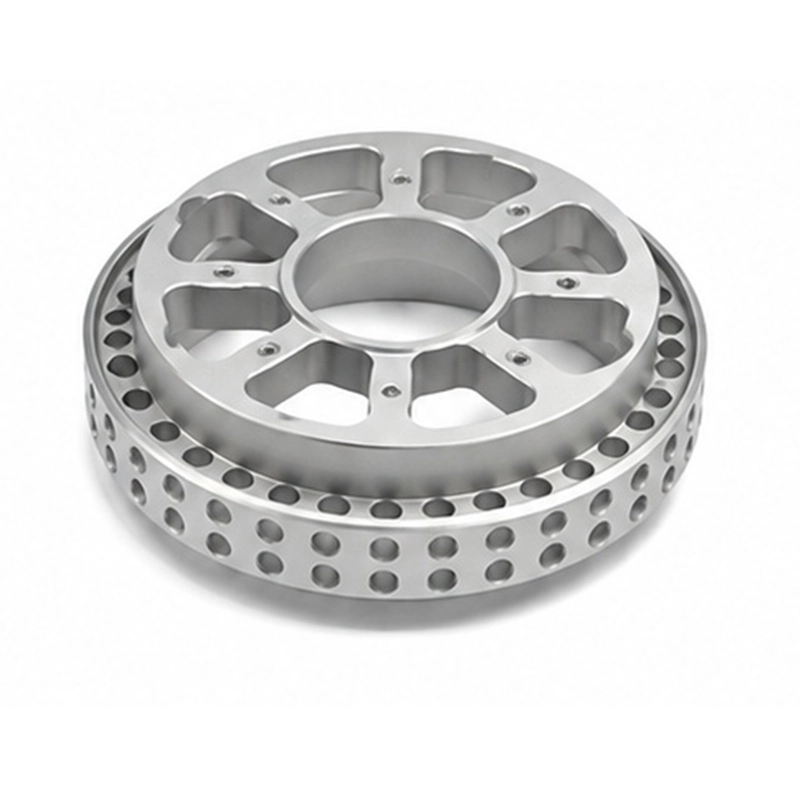

CNC Machined Aluminum Rotary Components
CNC machining can form bores, grooves, hubs, locating diameters, and mounting details within custom aluminum profiles. These components may be used in motors, transmission assemblies, and other rotating mechanisms.
Quick Info:
- Material: Aluminum 6061 / 7075
- Process: CNC Turning / Milling / Drilling
- Tolerance: ±0.02–0.05 mm
- Surface Finish: Anodizing / Polishing / Bead Blasting
- MOQ: 1 Piece
- Lead Time: 5–12 Working Days

Get Free Quote


Detailed Description
Rotating hubs and rollers carry several geometries around one centerline: a shaft opening, an outer running surface and a series of shoulders or grooves. Aluminum rotary components combine these features in one turned body, keeping nearby drive hardware compact. Pulleys, motor collars and lightweight wheels also accommodate secondary milled details.
Lathe operations establish the relationships among the bore, outside diameter and turned steps. Keyways, flats and bolt-circle holes then give the hub positive drive engagement or secure attachment to another rotating element. Aluminum 6061-T6 and 7075 offer machinable stock for this kind of light mechanical construction.
Rotational Surfaces That Share One Centerline
Grooved outer profiles create seating zones for belts or retaining components. Stepped bores receive shafts and collars at different diameters, while bolt patterns connect companion parts around the same center. These features belong to a rotating assembly rather than a stationary support bracket.
Available Surface Finishes
- As-Turned: Standard precision machining finish.
- Fine Polishing: Improves surface smoothness and appearance.
- Clear Anodizing: Adds corrosion resistance.
- Black Anodizing: Common for industrial rotary components.
- Hard Anodizing: Improves wear resistance on contact surfaces.
- Bead Blasting: Creates a uniform matte surface before anodizing.
Polished contact zones and anodized exposed surfaces can occupy different areas of the same turned part. Grooves remain clearly defined against the finished outside diameter.
Structural & Functional Breakdown
- Precision Central Bore: Supports shafts, bearings and rotational assemblies.
- Stepped Diameters: Accommodate multiple mating components.
- Circumferential Grooves: Support belts, retaining rings or sealing elements.
- Bolt Circle Patterns: Provide mechanical connection with adjacent parts.
- Keyways & Flats: Improve torque transfer and rotational positioning.
Keyways and flats introduce torque transfer where a purely cylindrical bore would allow relative rotation. Bolt circles offer another route for attaching a mating hub or plate.
Key Features
- Precision turning for rotational geometry
- Lightweight aluminum construction
- Controlled concentricity and runout
- Turning and milling combined in one component
- Custom bores, grooves and bolt patterns
- Prototype and low-to-medium-volume production
Compact rotary bodies often combine a turned outside profile with a few localized milled features; neither operation needs to dominate the entire shape.
Applications
- Motor Components
- Pulleys
- Rotary Hubs
- Rollers
- Robotics
- Automation Systems
- Transmission Equipment
- Industrial Machinery
In motor-driven rollers, aluminum rotary components place their working diameter around a centered shaft opening, with a shoulder setting the position of a nearby bearing or collar. Lightweight material keeps the rotating piece compact.
Belt-driven pulleys show the outer profile in action. Tracks, hub faces and fastener positions share one turned component, giving the transmission a clear mechanical layout.

Frequently Asked Questions
-
What makes a machined hub different from a stationary mounting part?

-
Its bore, turned outside diameter and rotational faces share an axis, while keyways or bolt patterns connect the hub to rotating hardware.
-
Can a pulley include a custom belt groove?
-
Circumferential groove shapes can form part of the turned profile, alongside a central bore, shoulders and other rotary features.
-
How do keyways work in aluminum rotary parts?
-
Keyways seat a mechanical key between the bore and shaft, creating a positive connection for torque transfer.
-
Are bolt circles combined with turned bores?
-
Yes. Drilled or milled bolt patterns surround the turned center opening and connect adjacent rotating components.
-
What is the purpose of stepped diameters?
-
Steps provide separate seating areas for collars, bearings, wheels or mating drive hardware along the rotary axis.
-
Which finishes suit visible rotary components?
-
Finishing options include as-turned surfaces, fine polishing, clear or black anodizing, hard anodizing and bead blasting.
-
Where do these components appear in equipment?
-
Motors, pulley assemblies, automation rollers, robotics and transmission equipment all use machined rotary geometry.


