




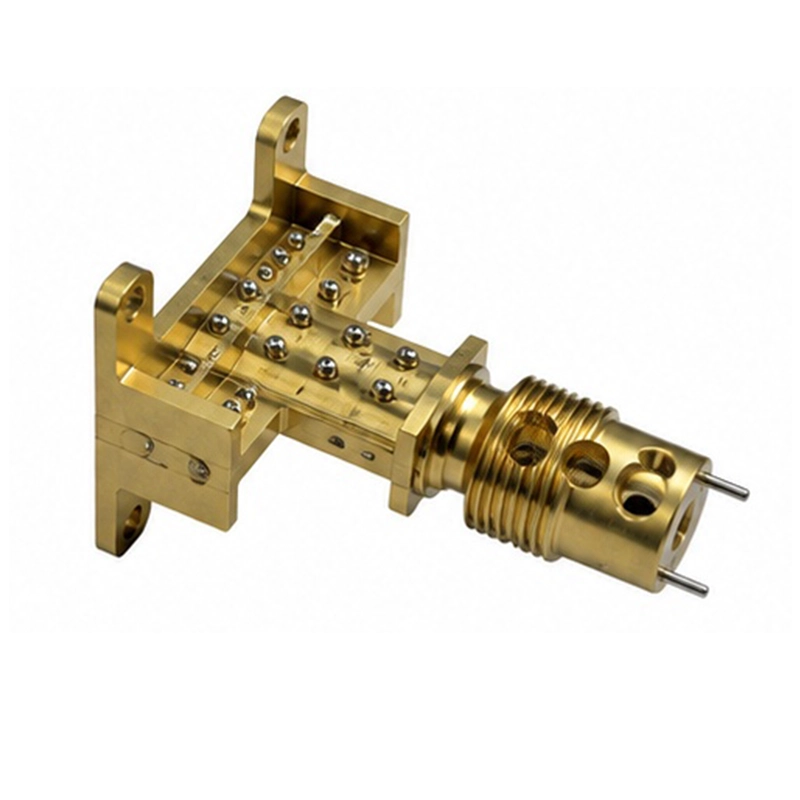

Precision CNC Machined Brass Components
CNC machined brass parts can include threads, bores, slots, flats, and mounting details for use in valves, instruments, electronic assemblies, and industrial mechanisms. Milling and turning allow different surfaces to be formed within the same component.
Quick Info:
- Material: Brass C360 / H59 / H62
- Process: CNC Turning / Milling / Drilling / Tapping
- Tolerance: ±0.02–0.05 mm
- Surface Finish: Polishing / Nickel Plating / Tin Plating
- MOQ: 1 Piece
- Lead Time: 5–12 Working Days

Get Free Quote


Detailed Description
Brass fittings often combine threaded connection, electrical contact and mechanical location within a surprisingly small envelope. CNC machined brass parts bring these functions into one metal body through turning, drilling and localized milling. Valve inserts, instrument connectors and terminals can share a clean central bore with slots or flats along the exterior.
Cylindrical features originate on the lathe, where the center opening and adjoining threads follow the same rotational axis. Milled wrench faces allow controlled installation, while cross holes or side slots introduce secondary paths without adding another connector piece. C360, H59 and H62 brass grades cover a range of machining and component uses.
Threads, Wrench Flats And Conductive Interfaces
Fine-pitch threads occupy the same compact profile as shoulders and small passages. Stepped ends establish the seating position while a flat or hex section provides a place for a tool to grip. Such details make brass components useful wherever electrical contact and mechanical fastening meet.
Available Surface Finishes
- As-Machined: Retains the natural brass appearance and machining finish.
- Polishing: Produces a smoother, brighter decorative surface.
- Nickel Plating: Improves surface protection and appearance.
- Chrome Plating: Available for selected visible components.
- Tin Plating: Suitable for certain electrical applications.
- Brushing: Creates a controlled directional surface texture.
Visible connectors may carry a plated finish, while internal valve pieces often retain their machined brass color. Threads and contact faces remain visually distinct from decorative surfaces.
Structural & Functional Breakdown
- Precision Threads: Internal and external threads support reliable assembly.
- Machined Bores: Suitable for fittings, bushings and flow components.
- Hex & Flat Features: Provide wrenching or assembly surfaces.
- Cross Holes & Slots: Support fluid, electrical or mechanical functions.
- Shoulders & Flanges: Provide axial positioning and component interfaces.
Short radial slots and accurately located cross holes give the same part more than one working surface. Shoulders also prevent a fitting from advancing beyond its seating position.
Key Features
- Excellent machinability for detailed geometries
- Good corrosion resistance
- Suitable electrical and thermal conductivity
- Precise internal and external threading
- Turning and milling capabilities
- Multiple plating and polishing options
Compact brass assemblies benefit from detailed machining, conductive surfaces and the familiar finish of exposed metal without relying on decoration.
Applications
- Electrical Connectors
- Valve Components
- Brass Fittings
- Instrument Parts
- Bushings & Spacers
- Electronic Equipment
- Fluid Control Systems
- Industrial Machinery
Inside an instrument panel, a threaded brass insert can connect a cable fitting and hold its position against a locating shoulder. Terminal features on adjacent components remain accessible without adding bulky external fittings.
In fluid-control hardware, CNC machined brass parts use the same machining versatility differently. Central passages, lateral holes and wrenching sections occupy separate faces, keeping the connection compact while giving installers clear mechanical access.

Frequently Asked Questions
-
Which brass grades are used for these components?

-
C360, H59 and H62 appear among the material options for machined fittings, inserts and connectors. Each grade brings a distinct combination of machining and mechanical characteristics.
-
Can threads and cross holes appear on the same part?
-
CNC turning produces axial threads and bores, while drilling or milling adds cross holes and slots on other faces of the brass body.
-
What functions do hexagonal flats serve?
-
Hexagonal flats provide wrench engagement during installation and removal, keeping torque away from narrower threaded or contact regions.
-
Are conductive contact surfaces possible?
-
Brass provides electrical conductivity and suits selected terminal and connector geometries. Contact details can share a part with mounting threads and shoulders.
-
How are internal passages incorporated?
-
Axial boring establishes the primary passage; smaller radial drilling or milled slots can connect other faces to that opening.
-
Which finishes are available for visible brass parts?
-
Polishing, brushing, nickel plating, chrome plating and tin plating appear alongside the natural as-machined brass finish.
-
Do brass inserts always have a cylindrical exterior?
-
Cylindrical regions can transition into hexagonal wrench sections, flats, shoulders and milled profiles within a single component.
-
Where are these machined parts commonly used?
-
Electrical connectors, valve components, fittings, instrument parts and fluid-control systems use the same family of small machined brass features.


