




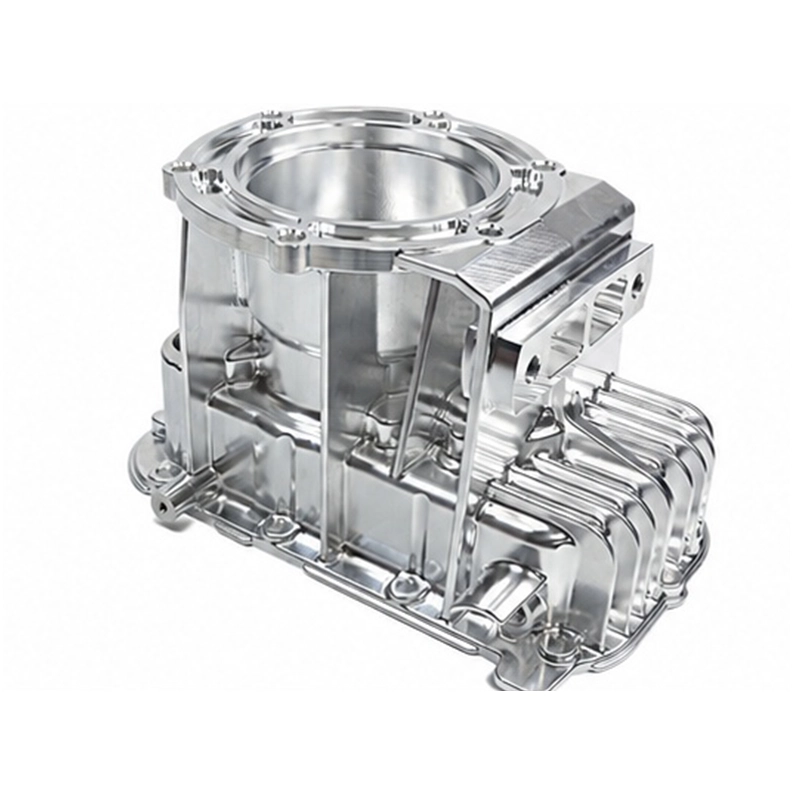

Custom CNC Machined Aluminum Mechanical Housings
CNC machined aluminum housings can incorporate cavities, precision bores, connection faces, and mounting features that locate internal hardware within the enclosure. Aluminum construction offers a relatively lightweight metal body for industrial and electromechanical equipment. The machined form can be developed around the actual arrangement of moving parts, connectors, or instruments, with the external walls and internal mounting surfaces produced as part of the same component.
Quick Info:
- Material: Aluminum 6061 / 6063 / 7075
- Process: CNC Milling
- Tolerance: ±0.03–0.05 mm
- Surface Finish: Anodizing / Bead Blasting / Powder Coating
- Machining Type: 3-Axis / 4-Axis / 5-Axis
- MOQ: 1 Piece
- Lead Time: 7–15 Working Days

Get Free Quote


Detailed Description
Gear trains and actuator assemblies need more than a protective cover: bearings, shafts and attachment points occupy precise positions around the internal space. CNC machined aluminum housings combine those seats with the surrounding shell. Deep pockets create room for moving components, while machined bores hold the cylindrical interfaces that guide them.
Milled cover faces meet the mating lid along a defined perimeter. Threaded ports and external bosses carry fasteners or fittings, with distinct faces accommodating mounting hardware on more than one side. Aluminum 6061, 6063 and 7075 suit different housing forms without requiring a cast blank.
Machined Cavities Around Bearing And Cover Interfaces
Interior pockets establish mechanical clearance while leaving material around bearing seats and threaded regions. Side openings connect the housed mechanism to adjoining equipment. Removable covers close the main cavity without obscuring service access through separate ports.
Available Surface Finishes
- As-Machined: Suitable for internal mechanical housings.
- Bead Blasting: Produces a consistent matte surface.
- Clear Anodizing: Provides corrosion protection.
- Black Anodizing: Common for industrial and automation housings.
- Hard Anodizing: Improves wear resistance on functional surfaces.
- Powder Coating: Suitable for larger mechanical enclosures.
Exposed exterior faces may carry anodized or coated finishes, while the machined cavity and close-fitting mechanical interfaces remain distinct functional surfaces.
Structural & Functional Breakdown
- Internal Machined Cavities: Accommodate motors, gears, bearings or electronic modules.
- Precision Bearing Bores: Support rotating components and shaft systems.
- Mounting Bosses: Provide integrated attachment points.
- Threaded Ports: Support fasteners, fittings and interfaces.
- Mating Surfaces: Precisely machined for covers and connected assemblies.
Bearing bores, cover lands and ports form a coherent mechanical shell. Internal cavities organize the drive components within a three-dimensional space.
Key Features
- Complex cavity and housing machining
- Precision bores and mounting interfaces
- Thin-wall and deep-pocket machining available
- Multi-face machining with controlled datum relationships
- Multiple anodizing and coating options
- Custom production from CAD models and drawings
Multi-face machining gives the enclosure its recognizable character: one side locates a shaft, another carries mounting screws, and the main opening reveals the internal assembly.
Applications
- Gearbox Housings
- Motor Housings
- Actuator Bodies
- Robotics
- Automation Equipment
- Sensor Systems
- Industrial Controllers
- Mechanical Equipment
Inside an actuator, CNC machined aluminum housings surround the drive mechanism with a machined cavity and hold a bearing near the output shaft. Housing geometry supplies both enclosure and mechanical reference.
Industrial sensor systems use shallower versions with cable exits and cover lands. Mounting bosses remain outside the protected volume, keeping installation features accessible around the shell.

Frequently Asked Questions
-
Can bearing seats and cover faces be machined into one housing?

-
CNC milling and boring can produce the bearing locations, internal pocket and cover seating surfaces within the same aluminum body.
-
What are the uses of deep machined cavities?
-
Deep pockets accommodate gears, actuators, motor parts and electronics while surrounding walls protect the internal arrangement.
-
Which aluminum grades appear for these housings?
-
6061, 6063 and 7075 aluminum
-
Can a housing have ports on different sides?
-
Machined threaded ports, attachment faces and bosses can appear on several exterior faces around the central cavity.
-
How do mounting bosses support the enclosure?
-
Bosses carry fastening points near a cavity or exterior wall without a separate bracket for every connection.
-
Are protective finishes available for aluminum housings?
-
As-machined, bead-blasted, clear or black anodized, hard anodized and powder-coated finishes are among the listed choices.
-
Do these housings also support electronics?
-
Electronic modules, sensors and control elements can occupy internal cavities along with the mounting and cover features.
-
Where are deep-pocket aluminum housings used?
-
Gearboxes, motor housings, actuator bodies, robotics and automation systems use machined three-dimensional shells.


