





Sheet Metal Enclosures & Chassis
Custom chassis can include folded walls, internal supports, ventilation openings, and fastening details produced through cutting, bending, welding, or riveting. Material options include aluminum, stainless steel, carbon steel, and galvanized steel. These enclosures are relevant to communication devices, industrial controls, and machinery.
Quick Info:
- Sheet Thickness: 0.8–3.0 mm
- Tolerance: ±0.20 mm
- Lead Time: 7–15 working days
- Process: Fiber Laser Cutting, CNC Punching, CNC Press Brake Bending, Riveting, Welding
- Material: Aluminum 5052, Aluminum 6061, SUS304, SUS316, SPCC Carbon Steel, SECC Galvanized Steel
- Custom Size: 50–1000 mm typical part size, fully customized according to drawings
- Production Scale: Prototype / low-volume / batch production up to 10,000+ pcs

Get Free Quote


Detailed Description
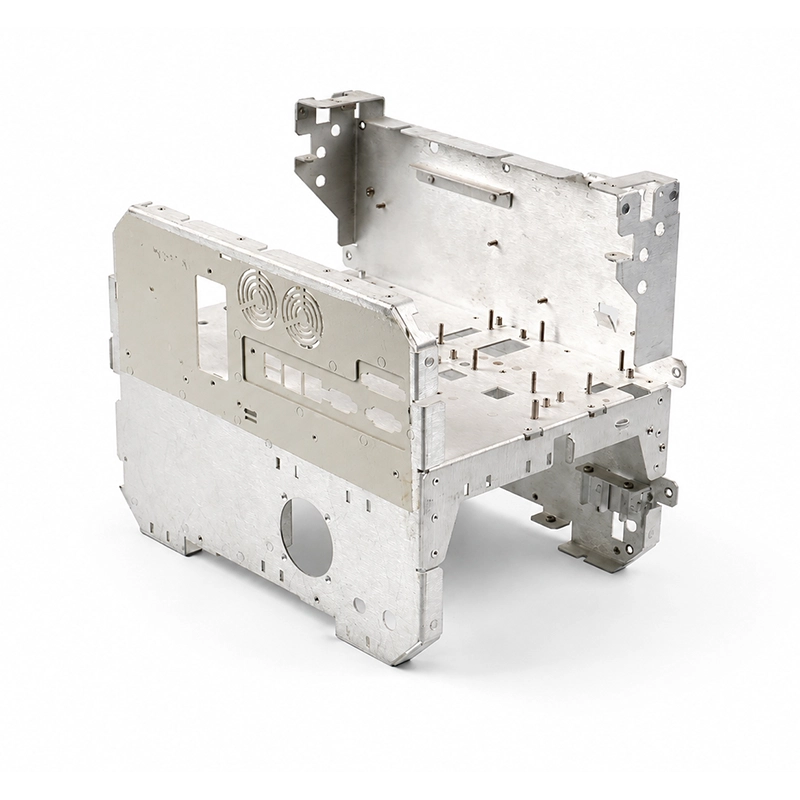
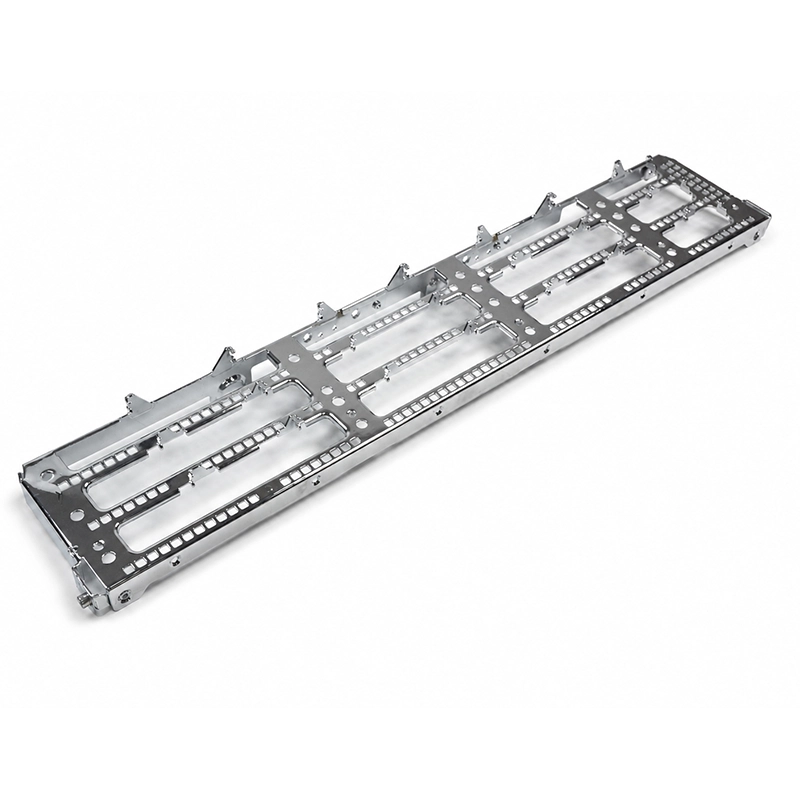
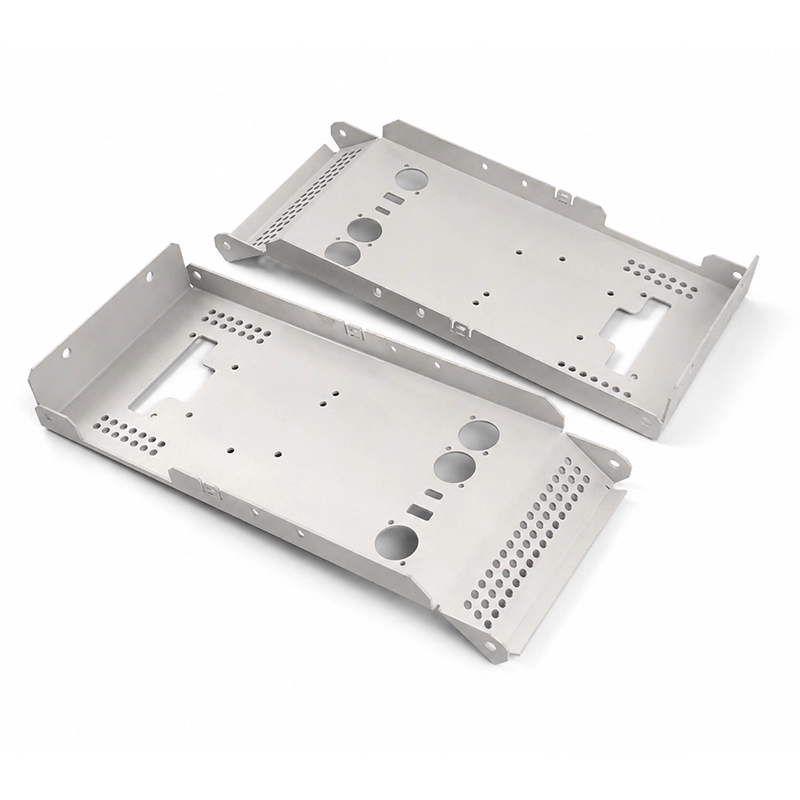
Power supplies and control electronics occupy more than a simple protective box. Custom sheet metal chassis arrange ventilation openings, cable access, equipment supports and removable panels around the installed assembly. Folded sheet sections create walls and return flanges, while fastened joints connect internal frames or separate covers.
Cutouts around terminal blocks and connectors allow external wiring to meet internal modules without crowding the mounting area. Formed ribs strengthen broad sidewalls, and internally fitted nuts or studs anchor PCBs and power hardware. Different panel faces remain accessible for installation and routine service.
Available Surface Finishes
- Powder Coating: Typical 60–100 μm protective coating with customizable colors, suitable for industrial equipment housings.
- Anodizing: Protective and decorative treatment commonly used for aluminum enclosures.
- Zinc Plating: Corrosion-resistant metallic coating suitable for carbon steel components.
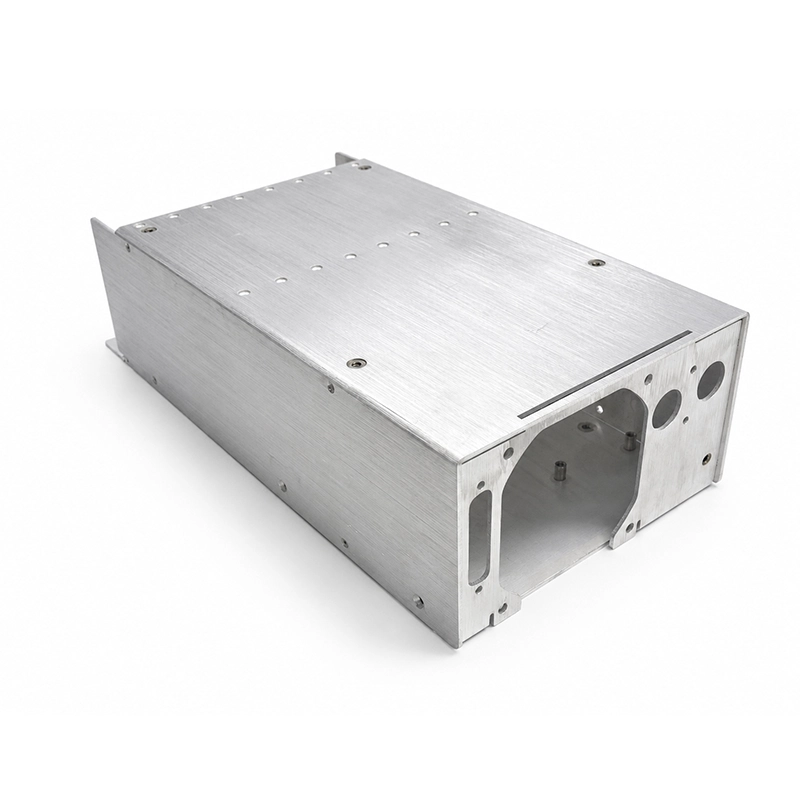
- Brushed Finish: Directional surface texture for stainless steel or aluminum exterior panels.
Powder-coated and brushed exterior panels carry distinct appearances on cabinets and electronic systems. Functional openings remain part of the fabricated geometry rather than an added decorative treatment.
Structural & Functional Breakdown
- Multi-bend Enclosure Structure: Precision folded walls and flanges create rigid box-shaped structures while reducing the number of assembled components.
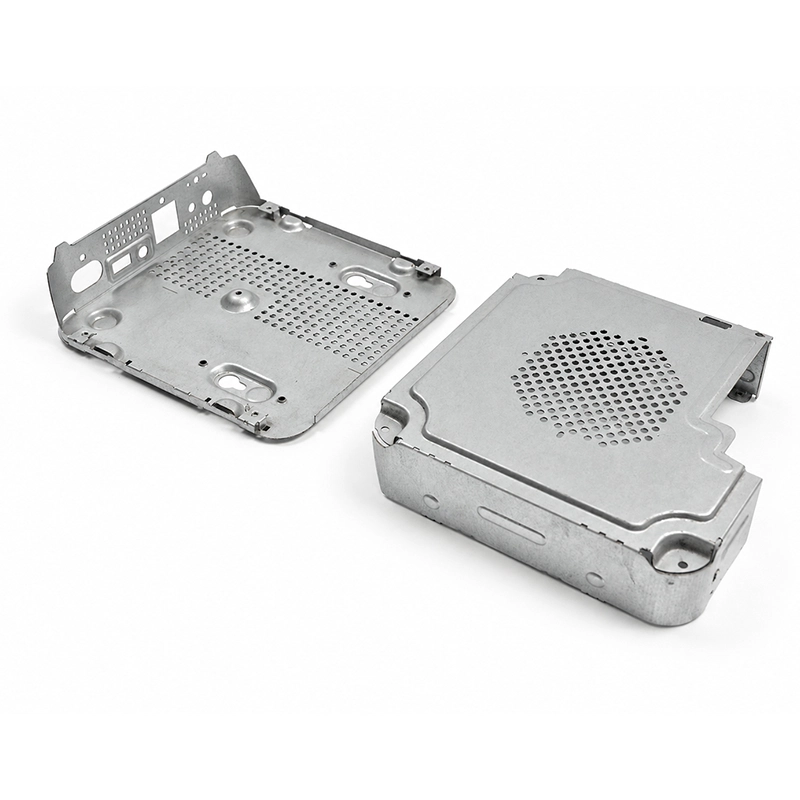
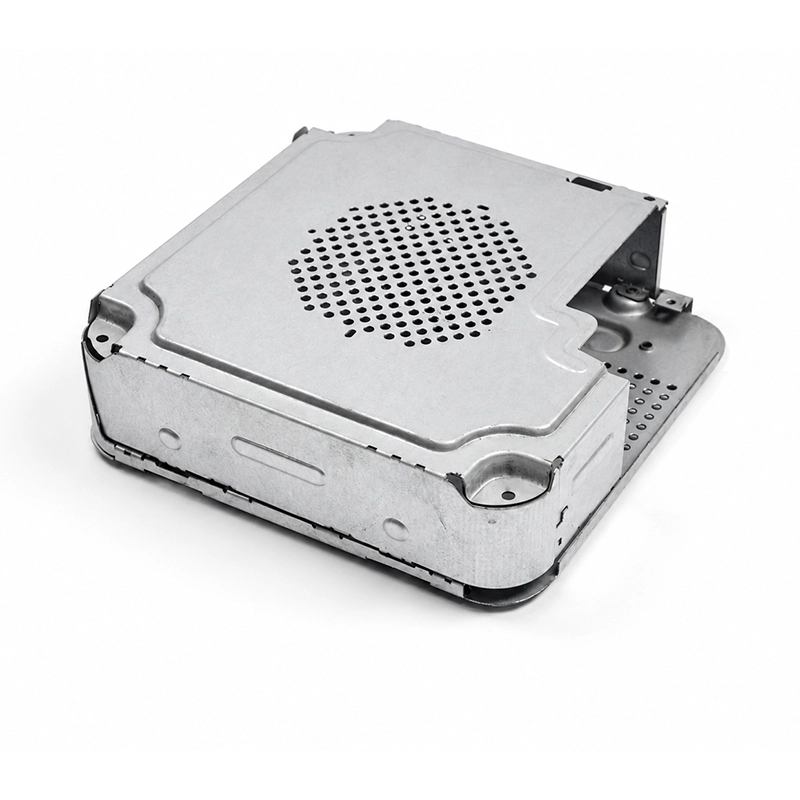
- Integrated Ventilation Structure: Round holes, slots, louvers and custom perforation patterns can be incorporated for heat dissipation.
- Internal Mounting Structure: Supports threaded holes, PEM nuts, studs, brackets and locating features for PCB, power supply and mechanical component installation.
- Reinforced Chassis Structure: Embossed ribs, folded edges and formed flanges improve stiffness while maintaining relatively low sheet thickness.
Ventilation patterns can share a wall with mounting flanges and cable entries. Folded returns also protect exposed edges and strengthen the perimeter around doors or covers.
Key Machining Highlights
- Precision Laser Cutting: Typical cutting tolerance of ±0.10–0.15 mm supports complex openings and accurate component positioning.
- CNC Press Brake Forming: Multi-angle bending with typical ±1° angle tolerance supports complex enclosure geometries.
- Integrated Assembly Capability: Riveting, spot welding, TIG welding and mechanical fastening can be combined according to enclosure design.
- Full Drawing-based Customization: Supports STEP, STP, DWG, DXF and PDF drawings for prototype and batch manufacturing.
Fabrication combines cutting, bending and fastening into a complete assembly instead of treating each panel as an isolated component. Internal brackets establish separate support levels inside the enclosure.
Application Fields
- Industrial Control Enclosures
- Electronic Equipment Chassis
- Communication Device Housings
- Power Supply & Electrical Enclosures
- Machine Control Cabinets & Internal Frames
Communication equipment often places connectors near the rear panel and status interfaces at the front. Industrial control units favour accessible wiring routes and strong mounting positions within the same folded shell.
Custom sheet metal chassis provide the structure surrounding those functions. Service covers, side vents and internal mounting rails work together as part of a finished equipment assembly rather than a collection of independent flat plates.

Frequently Asked Questions
-
Which operations form a sheet metal chassis?

-
Laser cutting or CNC punching produces openings, followed by press-brake bending and selected riveting, welding or fastening.
-
Can the enclosure contain internal brackets?
-
Internal brackets, studs and threaded hardware support PCBs, power supplies and mechanical components.
-
How are ventilation openings incorporated?
-
Perforations, slots and louvered sections can be formed in the wall panels before enclosure assembly.
-
Are several metal panels joined into one chassis?
-
Folded sections and separate panels can be combined through rivets, welds and mechanical fasteners.
-
Can cable access and connector cutouts share a panel?
-
Yes. Cable openings and connector ports can occupy selected faces around the internal equipment layout.
-
Which metals are listed for these enclosures?
-
Aluminum, stainless steel, carbon steel and galvanized steel.
-
What surface treatments appear in this chassis range?
-
Powder coating, anodizing, zinc plating and brushed finishes are included.
-
Where do sheet metal chassis commonly appear?
-
Industrial controls, communication devices, electronic equipment and electrical power assemblies use fabricated chassis structures.


