




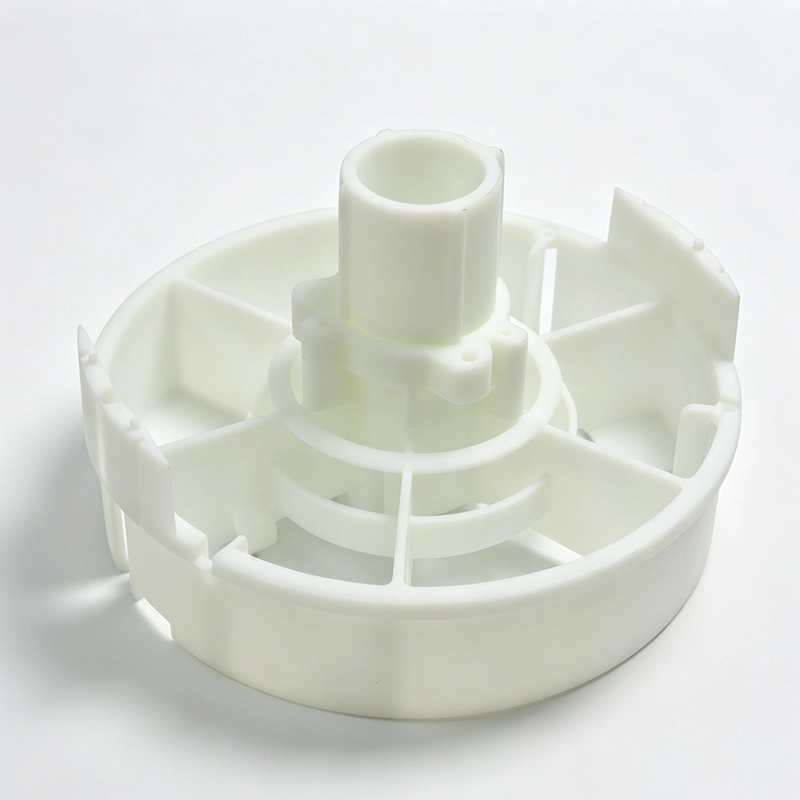

3D Printing of Industrial & Automotive Functional Prototypes
SLA or SLS 3D printing can create shaped parts for mechanical trials, equipment fit checks, and pre-production evaluation. These automotive functional prototypes may represent interior elements or industrial equipment components.
Quick Info:
- Process: Industrial SLA / SLS 3D Printing
- Tolerance: ±0.08mm – ±0.12mm
- Lead Time: 4–7 Working Days
- Material: High‑temp Resin, Nylon, Glass‑filled Nylon
- Surface Finish: Polishing, Spray Paint, Wear‑resistant Coating
- Service: Functional Test Sample, Large‑size Integrated Prototype, Small‑batch Trial Parts

Get Free Quote


Detailed Description
Mechanical interaction reveals far more than the outline of a vehicle part. 3D printed automotive functional prototypes bring fastening points, rotating clearances and internal shell spaces into an assembly that engineers can handle. Automotive trim sections and industrial brackets use different geometries, yet both benefit from physical checks around the neighbouring hardware.
SLS nylon suits selected handling and structural studies, while SLA resin captures fine surfaces for close visual inspection. Integrated screw seats and open mounting regions help position surrounding parts without rebuilding a full production assembly. Local wall reinforcement offers extra material around areas repeatedly engaged during trial fitting.
Available Surface Finishes
- As‑printed: Raw SLS/SLA surface, for pure mechanical performance testing without cosmetic requirement.
- Fine Polishing: Smoothed outer surfaces for automotive interior demonstration samples.
- Wear‑Resistant Coating: Enhance surface friction resistance for moving mechanical components.
- Spray Painting: Industrial‑grade painting for automotive interior display prototypes.
Surface finishing separates working samples from presentation pieces. Raw printed finishes keep prototype geometry visible, while polishing and paint give selected interior parts a more finished appearance.
Structural & Functional Breakdown
- Load‑Bearing Reinforced Frame Structure: Reinforce wall thickness and stress‑concentration positions to withstand mechanical load during equipment debugging.
- Precision Mating Assembly Structure: Strictly control hole position, shaft hole and fitting clearance for mechanical movement coordination test.
- Large‑Size Integrated Shell Structure: One‑piece forming for large automotive interior parts avoiding multi‑part splicing error.
- Heat‑Dissipation & Installation Reserved Structure: Preserve mounting holes and heat‑dissipation openings consistent with final production drawings.
Fan blades, brackets and large shells create distinct access challenges. Shaft holes, mounting openings and reinforcement features can coexist with the exterior shape in one printed component.
Key Machining Highlights
- Industrial‑Grade High‑Strength Material Selection: Adopt high‑temperature resin or glass‑filled nylon to satisfy industrial working‑condition requirements.
- Enhanced Post‑curing Treatment: Improve material hardness and anti‑deformation performance under continuous working status.
- Large‑Format Integrated Printing Capability: Realize single‑piece forming for large automotive interior components.
- Mechanical‑Oriented Dimensional Optimization: Adjust structure for actual load, avoid fracture during functional testing.
Trial assemblies make interference visible around cables, fasteners and moving neighbours. Prototype geometry also allows repeated installation sequences without treating the printed part as a qualified production component.
Application Fields
- Automotive Interior Parts Pre‑production Prototypes
- Industrial Automation Equipment Component Samples
- Mechanical Fan Blade & Rotating Part Testing
- Equipment Housing & Support Bracket Prototypes
- Engineering Machinery Functional Verification Samples
Automotive interior prototypes can bring dashboard-adjacent shells into a physical space review, with visible edges and mounting clips examined together. Industrial equipment samples place brackets or small rotating components beside their mating parts during development builds.
3D printed automotive functional prototypes provide recognizable mechanical interfaces before permanent tooling enters the process. Each printed example supports practical observations about movement, access and assembly order within the intended product layout.

Frequently Asked Questions
-
Which automotive parts appear in this prototype category?

-
Interior shells, fan blades, mechanical supports and equipment brackets.
-
What is the role of SLS printing in functional prototypes?
-
SLS produces nylon-based parts used for handling, fit and selected mechanical assembly exercises.
-
What does SLA add to an automotive prototype?
-
SLA captures fine contours and supports polished or painted surfaces on appearance-focused parts.
-
Can mounting holes and connection points be printed together?
-
Integrated mounting holes, fitting interfaces and reinforced areas can be formed within a single prototype geometry.
-
Which finishes can appear on an automotive display sample?
-
Fine polishing and spray painting appear alongside as-printed surfaces and selected coatings.
-
Can large shell features be built as one piece?
-
Large-format printing is included as a route for integrated interior shell structures in the source material.
-
What assembly details are visible in a printed functional sample?
-
Fastener access, connection clearances, neighbouring parts and fitted openings can be inspected directly.


