





Your Automotive Partner
TOP Prototype supports automotive engineering teams with precision-manufactured components for validation, testing, and production programs. We help reduce development risk while meeting demanding requirements for accuracy, durability, and consistency.
Typical Applications:
Powertrain · Chassis · Interior systems · EV components · Testing fixtures

Your Automotive Partner
TOP Prototype supports automotive engineering teams with precision-manufactured components for validation, testing, and production programs. We help reduce development risk while meeting demanding requirements for accuracy, durability, and consistency.
Typical Applications:
Powertrain · Chassis · Interior systems · EV components · Testing fixtures
Manufacturing for Automotive Means Balancing Performance, Cost, and Scale
Automotive parts must perform reliably under mechanical stress, vibration, heat, and long-term use—often at tight cost targets and increasing production volumes.
Core Constraints for Part Development:

Strict Tolerance Requirements 1

Strict Tolerance Requirements 2

Strict Tolerance Requirements 3

Strict Tolerance Requirements 4

Strict Tolerance Requirements 5

Strict Tolerance Requirements 6

Engineering-Driven Support for Automotive Programs
Our end-to-end support aligns with automotive development workflows, from design validation to full production readiness.

Design to Manufacturing
-
Translate complex automotive designs into stable, manufacturable processes. 1
-
Translate complex automotive designs into stable, manufacturable processes. 2
-
Translate complex automotive designs into stable, manufacturable processes. 3

Design to Manufacturing 2
-
Translate complex automotive designs into stable, manufacturable processes. 4
-
Translate complex automotive designs into stable, manufacturable processes. 5
-
Translate complex automotive designs into stable, manufacturable processes. 6
Design to Manufacturing 3
-
Translate complex automotive designs into stable, manufacturable processes. 7
-
Translate complex automotive designs into stable, manufacturable processes. 8
-
Translate complex automotive designs into stable, manufacturable processes. 9
Automotive Parts We Manufacture
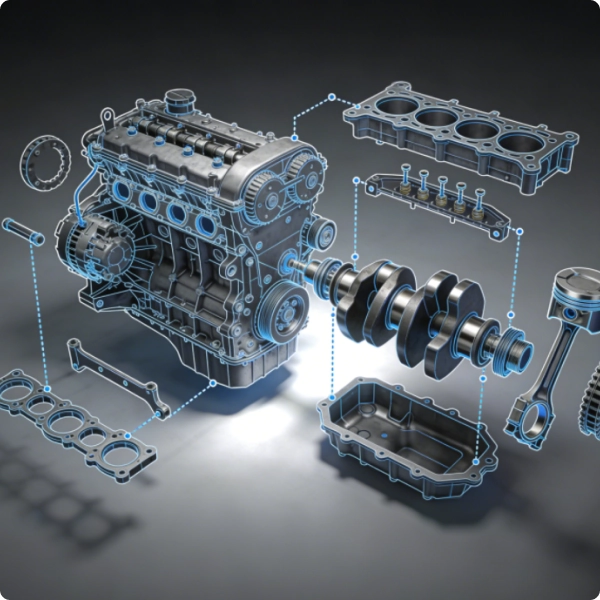
We manufacture a wide range of automotive components that support product development from early validation through production readiness. Our capabilities are focused on parts that require tight tolerances, reliable performance, and consistent quality under real operating conditions.
Typical automotive parts we produce include powertrain and drivetrain components, EV structural and functional parts, precision shafts and connectors, housings and enclosures, plastic interior components, and aftermarket or end-of-life replacement parts. Whether the goal is functional testing, assembly verification, or low-to-medium volume production, our manufacturing approach emphasizes accuracy where it matters, material suitability for automotive environments, and repeatable results across batches.

Powertrain & Drivetrain Components 1

Powertrain & Drivetrain Components 2

Powertrain & Drivetrain Components 3

Powertrain & Drivetrain Components 4

Powertrain & Drivetrain Components 5

Powertrain & Drivetrain Components 6
*These examples represent a portion of our automotive manufacturing work.
Many customer projects are subject to confidentiality—contact us to discuss your specific part requirements.


Manufacturing Processes for Automotive Parts
Different automotive components require different manufacturing approaches depending on function, material, and volume.
Commonly used processes include:
- CNC Machining - functional prototypes and precision components
- CNC Machining - functional prototypes and precision components
- CNC Machining - functional prototypes and precision components
- CNC Machining - functional prototypes and precision components
- CNC Machining - functional prototypes and precision components
Process selection is driven by performance requirements — not convenience.

Request a Quote
Automotive Materials
Material selection is driven by part function, operating conditions, and production requirements.
| Aluminum Alloys | Steel & Stainless Steel | Engineering Plastics | High-Performance Plastics |
| Structural parts, housings, brackets | Shafts, load-bearing, under-hood | Shafts, load-bearing, under-hood | Interior parts, enclosures |


Aluminum 6061 / 7075
Lightweight metals widely used in automotive prototyping and production for their balance of strength, machinability, and corrosion resistance.
Typical Automotive Parts:
Structural brackets, housings, mounting frames, functional prototypes
Explore Materials

Aluminum 6061 / 7075
Lightweight metals widely used in automotive prototyping and production for their balance of strength, machinability, and corrosion resistance.
Typical Automotive Parts:
Structural brackets, housings, mounting frames, functional prototypes
Explore Materials
Aluminum 6061 / 7075
Lightweight metals widely used in automotive prototyping and production for their balance of strength, machinability, and corrosion resistance.
Typical Automotive Parts:
Structural brackets, housings, mounting frames, functional prototypes
Explore Materials


- Case Study
- Case Study
Faraway Urban Off-Road Caravan: 3D Printed & CNC Machined Components for Automotive Innovation
The Faraway Urban Off-Road Caravan showcases the integration of advanced 3D printing and CNC machining in automotive applications. This caravan incorporates 43 custom 3D printed components (in both metal and nylon) alongside precision CNC-machined parts, which are used across critical systems including structural supports, interior fixtures, and functional assemblies. Examples include the suspension bracket, audio mount, air duct, and towing electrical connector.
View Full Case Study
Why Choose TOP Prototype

Automotive Tolerance Expertise 1
Automotive tolerances are applied only where function, assembly, or durability requires them,avoiding unnecessary over-specification and cost inflation. 1
Automotive Tolerance Expertise 2
Automotive tolerances are applied only where function, assembly, or durability requires them,avoiding unnecessary over-specification and cost inflation. 2
Automotive Tolerance Expertise 3
Automotive tolerances are applied only where function, assembly, or durability requires them,avoiding unnecessary over-specification and cost inflation. 3
Automotive Tolerance Expertise 4
Automotive tolerances are applied only where function, assembly, or durability requires them,avoiding unnecessary over-specification and cost inflation. 4
Automotive Tolerance Expertise 5
Automotive tolerances are applied only where function, assembly, or durability requires them,avoiding unnecessary over-specification and cost inflation. 5
Automotive Tolerance Expertise 6
Automotive tolerances are applied only where function, assembly, or durability requires them,avoiding unnecessary over-specification and cost inflation. 6
Request a Quote
Automotive FAQs
-
What tolerance levels are typically achievable for automotive CNC parts? 1

-
For most automotive components, standard tolerances of ±0.05 mm are commonly achievable, with tighter tolerances applied only where function requires it. Critical interfaces, alignment features, or rotating components can be controlled to tighter limits based on design intent.
Actual tolerances depend on part geometry, material, and functional requirements rather than a fixed blanket standard.
f you require a more detailed explanation, please contact us.

-
What tolerance levels are typically achievable for automotive CNC parts? 2
-
For most automotive components, standard tolerances of ±0.05 mm are commonly achievable, with tighter tolerances applied only where function requires it. Critical interfaces, alignment features, or rotating components can be controlled to tighter limits based on design intent.
Actual tolerances depend on part geometry, material, and functional requirements rather than a fixed blanket standard.
f you require a more detailed explanation, please contact us.
-
What tolerance levels are typically achievable for automotive CNC parts? 3
-
For most automotive components, standard tolerances of ±0.05 mm are commonly achievable, with tighter tolerances applied only where function requires it. Critical interfaces, alignment features, or rotating components can be controlled to tighter limits based on design intent.
Actual tolerances depend on part geometry, material, and functional requirements rather than a fixed blanket standard.
f you require a more detailed explanation, please contact us.
-
What tolerance levels are typically achievable for automotive CNC parts? 4
-
For most automotive components, standard tolerances of ±0.05 mm are commonly achievable, with tighter tolerances applied only where function requires it. Critical interfaces, alignment features, or rotating components can be controlled to tighter limits based on design intent.
Actual tolerances depend on part geometry, material, and functional requirements rather than a fixed blanket standard.
f you require a more detailed explanation, please contact us.
Customer Reviews

0 Salomon Alain Mpouma
June 26, 2026

Ms. Yael was very professional when assisting me with my case and helped lead me to find all the information Ineeded to move my case forward.
1 Salomon Alain Mpouma
June 26, 2026
Ms. Yael was very professional when assisting me with my case and helped lead me to find all the information Ineeded to move my case forward.
2 Salomon Alain Mpouma
June 26, 2026
Ms. Yael was very professional when assisting me with my case and helped lead me to find all the information Ineeded to move my case forward.
3 Salomon Alain Mpouma
June 26, 2026
Ms. Yael was very professional when assisting me with my case and helped lead me to find all the information Ineeded to move my case forward.
4 Salomon Alain Mpouma
June 26, 2026
Ms. Yael was very professional when assisting me with my case and helped lead me to find all the information Ineeded to move my case forward.
5 Salomon Alain Mpouma
June 26, 2026
Ms. Yael was very professional when assisting me with my case and helped lead me to find all the information Ineeded to move my case forward.
Start Your Project Inquiry
Your information is kept confidential and reviewed directly by our engineering team. We typically respond within 1 business day with practical technical feedback.


