




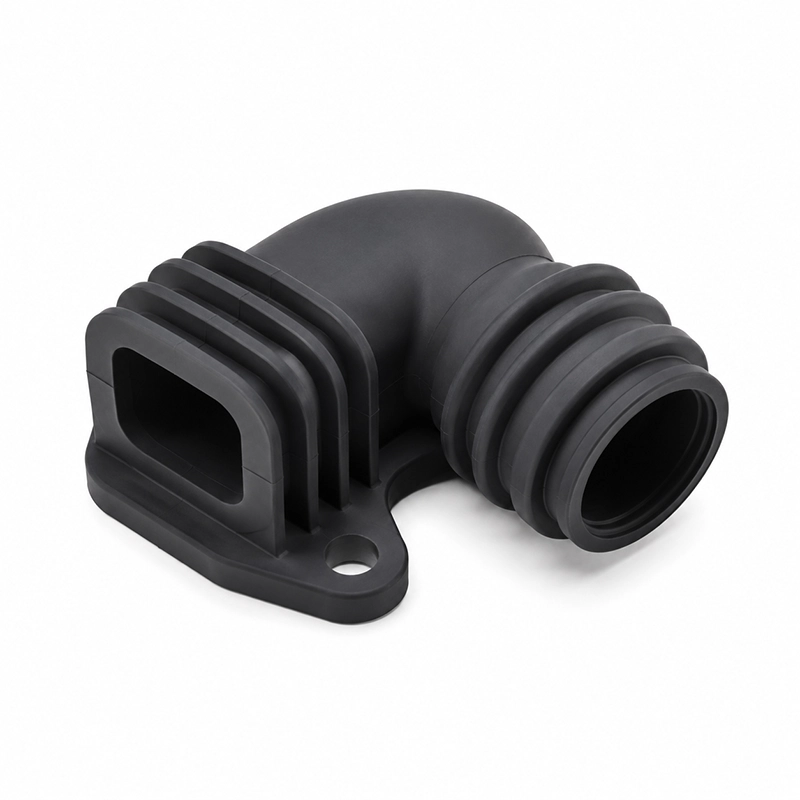

Vacuum Cast Rubber-Like Components
Vacuum cast rubber-like components use polyurethane elastomers to reproduce flexible shapes with selectable hardness, colors, and surface textures. They can be formed as buttons, protective covers, grips, sealing details, or damping parts for design trials. Because the material is cast in silicone molds, several representative samples can be made for physical evaluation without developing a dedicated mold for another production process.
Quick Info:
- Wall Thickness: 1.5–8.0 mm
- Dimensional Tolerance: ±0.3–0.5 mm
- Material: Flexible PU, Rubber-like Polyurethane, TPE-like Casting Resin
- Surface Finish: Matte, Gloss, Textured, Soft-touch
- Lead Time: 5–12 working days

Get Free Quote


Detailed Description
Soft interfaces often need testing before a project commits to hard tooling. Vacuum cast rubber-like parts use polyurethane elastomer systems to simulate selected soft rubber, TPE-like or TPU-like behavior. A silicone mold captures the shape of a master pattern, including grip textures, undercuts and flexible local details.
Surface Texture and Prototype Color Options
- Fine Matte Finish: Common for seals, grips and functional soft parts.
- Gloss Finish: Suitable for decorative flexible components.
- Textured Finish: Replicates selected grain or grip patterns from the master model.
- Soft-touch Surface: Provides a tactile finish for user-contact components.
- Custom Coloring: Pigments can be added to create different prototype colors.
The mold surface can transfer smooth, matte or textured appearances onto the cast piece. Pigments support prototype color trials, while gloss and tactile feel depend on the resin system and mold condition. Appearance should not substitute for functional checks of flexibility.
Deformable Seals, Buttons and Protective Shapes
- Flexible Seal Structure: Supports compression, contact and sealing evaluation.
- Soft Button Structure: Suitable for keypad and control-interface prototypes.
- Protective Boot Structure: Provides flexible protection around joints, switches and connectors.
- Flexible Grip Structure: Supports ergonomic testing of handles and handheld products.
- Shock-absorbing Structure: Can simulate damping pads, bumpers and protective components.
A button membrane, protective boot or gasket profile may need to compress around a mating edge. Geometry affects that deformation as much as hardness does. A drawing should identify thin sections, contact lips, undercuts and the areas that must recover after handling.
Flexible Polyurethane Casting Considerations
- Adjustable Hardness: Different polyurethane elastomers can simulate a broad range of flexible material behaviors.
- Complex Flexible Geometry: Silicone molds support undercuts and deformable structures.
- Fine Detail Replication: Textures, grooves and small surface features can be reproduced from the master.
- Low-volume Production: Suitable for repeated functional samples without hard tooling.
- Color & Texture Flexibility: Appearance can be customized for design and ergonomic validation.
For vacuum cast rubber-like parts, material selection should begin with the target response rather than a generic hardness label. Flexible resins may approximate selected behaviors but are not direct substitutes for every production elastomer. Casting samples can support fit and tactile evaluation before specifying the production route.
Prototype Uses for Soft Mechanical Interfaces
- Seals & Gaskets
- Flexible Buttons
- Protective Boots
- Soft Grips
- Vibration Damping Parts
- Flexible Mechanical Prototypes
Control buttons may emphasize touch and return feel, while protective boots prioritize shape around a moving joint.

Frequently Asked Questions
-
Is the silicone mold the material of the final part?

-
No. The silicone mold provides the cavity; the prototype part uses a selected casting resin.
-
Can a soft grip texture be reproduced?
-
Yes. A detailed master pattern can transfer specified surface grain or grip features through the silicone mold.
-
Are undercuts possible in flexible cast parts?
-
Some undercuts can be reproduced because the mold is flexible. Demolding feasibility still depends on the shape.
-
Is hardness adjustable?
-
Yes. Different casting resin systems offer different hardness and tactile responses.
-
Can seals be evaluated for compression?
-
Prototype profiles can be assembled and compressed for an initial fit assessment, though sealing performance needs application testing.
-
What files are useful for evaluating the mold?
-
Share a CAD model, target hardness or feel, quantity, color and the functional details of thin or flexible features.
-
Is vacuum casting suitable for repeat small batches?
-
Yes. It can reproduce several prototype units from a master and silicone mold, subject to mold life and part geometry.


