




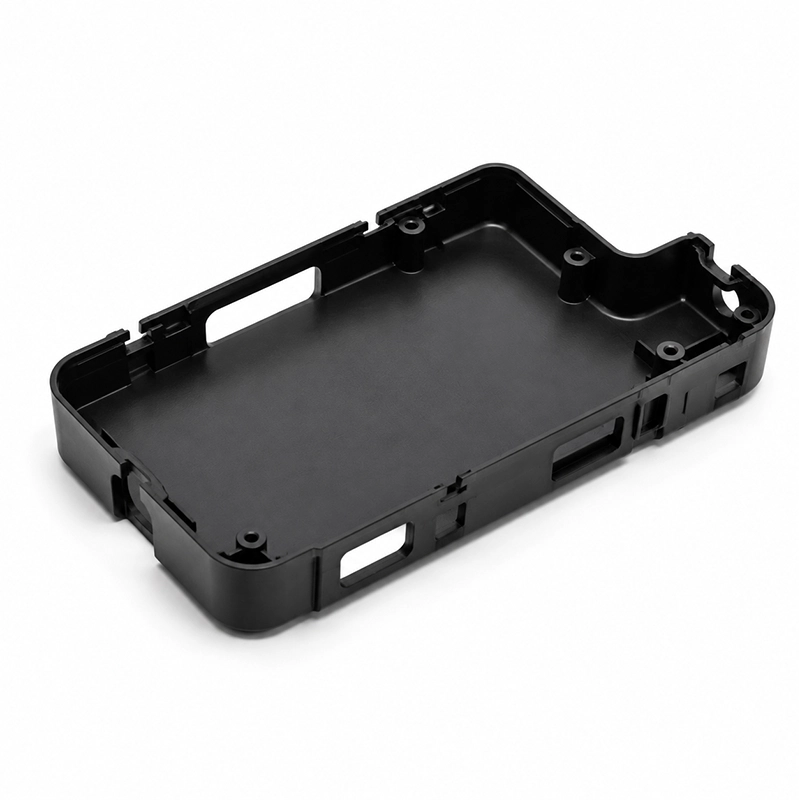

Thin Wall Injection Molded Parts
Custom thin wall injection molded parts are used in housings, covers, and other plastic components where a lightweight profile is required. Their design may include reinforcing ribs, attachment details, and wall transitions that support the intended assembly. Mold design and process control both influence how these narrow sections fill and retain their shape, particularly when the same component must be produced across repeated manufacturing runs.
Quick Info:
- Material: ABS / PC / PP / Nylon
- Process: Injection Molding
- Wall Thickness: 0.5–2.0 mm
- Tolerance: ±0.05–0.20 mm
- Surface Finish: Texture / Polishing / Painting
- Lead Time: 15–30 Working Days

Get Free Quote


Detailed Description
Thin wall injection molded parts combine thin shell sections with localized reinforcement around attachment points. A compact handheld enclosure may use a shallow lid, perimeter clips and short internal ribs rather than a uniformly thick wall. Careful placement of these elements preserves space for electronics without adding unnecessary plastic around every surface.
Long, narrow flow paths create filling challenges that differ from those of thicker molded components. Gate position and cooling design influence where material reaches the cavity and how the shell holds its dimensions. ABS, PC, PP and nylon provide different options for stiffness, impact behavior, thermal needs and surface appearance; the grade and geometry require review together.
Available Surface Finishes
- SPI Polishing: Provides smooth cosmetic surfaces for appearance-focused products.
- Texture Finishing: Adds grip, visual effects and reduces visible molding marks.
- VDI Texture: Common for industrial and consumer plastic housings.
- Painting: Supports customized colors and appearance requirements.
- Laser Marking: Available for logos, labels and product identification.
A textured cover can mask minor visual marks, while a smooth panel may need additional attention to gate traces or visible weld lines. Marking and finish requirements belong in the drawing package before tooling details are finalized.
Structural & Functional Breakdown
- Thin Wall Sections: Reduce component weight while maintaining required strength.
- Integrated Ribs: Improve stiffness without increasing wall thickness.
- Snap-Fit Features: Enable tool-free assembly.
- Mounting Bosses: Provide reliable fastening points.
- Complex Surface Geometry: Supports ergonomic and functional designs.
Snap fingers need an accessible release direction, and bosses require enough surrounding material for their intended fastener. Ribs can stiffen long panels, but their thickness and position need control to limit sink marks on the visible face.
Key Features
- Lightweight Plastic Structures: Suitable for applications requiring reduced material usage.
- Optimized Mold Filling: Mold design supports stable production of thin sections.
- Integrated Functional Features: Ribs, clips, bosses and mounting elements can be molded directly.
- High Production Efficiency: Injection molding supports repeatable large-volume manufacturing.
- Custom Material Selection: ABS, PC, PP and Nylon meet different performance requirements.
- Prototype to Mass Production: Suitable for product validation and commercial production.
In a compact electronic cover, thin wall injection molded parts can combine a clip-on perimeter with molded ventilation openings and internal board supports. Trial assemblies help reveal interference between a clip, connector cable and adjacent wall before repeating the mold cycle across a production run.
Applications
- Consumer Electronics
- Smart Devices
- Household Products
- Industrial Equipment
- Portable Devices
- Automotive Interior Components
- Plastic Housings
Drawings should identify critical wall sections, contact faces and cosmetic zones separately. These references guide choices about parting lines, material, gating and acceptable finish without assuming that every thin feature will behave the same way.

Frequently Asked Questions
-
How is minimum wall thickness determined for a molded cover?

-
The required thickness depends on material grade, flow length, gate position and the surrounding features. Mold-flow review and sample checks help establish a practical section for the part.
-
Can snap fits and screw bosses share a thin-wall housing?
-
They can, but each needs local geometry for its own load. The screw boss requires support around the fastener; a snap finger needs clearance for controlled deflection.
-
Which materials are commonly considered?
-
ABS, PC, PP and nylon can suit different stiffness, impact, temperature and cosmetic needs. Selection also affects shrinkage and the behavior of narrow sections.
-
How can ribs support a broad thin panel?
-
Ribs can limit bending without thickening the entire panel. Their thickness and spacing need review to avoid sink marks and uneven cooling on the outer face.
-
What causes incomplete filling in long, thin cavities?
-
Insufficient flow access, unsuitable gate placement, material viscosity or processing conditions may leave sections unfilled. The causes require part- and mold-specific analysis.
-
Can a textured surface help an electronic enclosure?
-
Texture can change grip and reduce the visibility of some surface marks. It does not correct dimensional problems or poor filling.
-
Are printed prototypes useful before mold production?
-
They can expose assembly and access problems, although printed materials cannot reproduce molded flow marks, shrinkage or long-term snap behavior.
-
What details should be included with the CAD model?
-
Provide nominal wall thicknesses, visible surfaces, material preference, fastening details, intended quantity and the dimensions that control assembly.


