




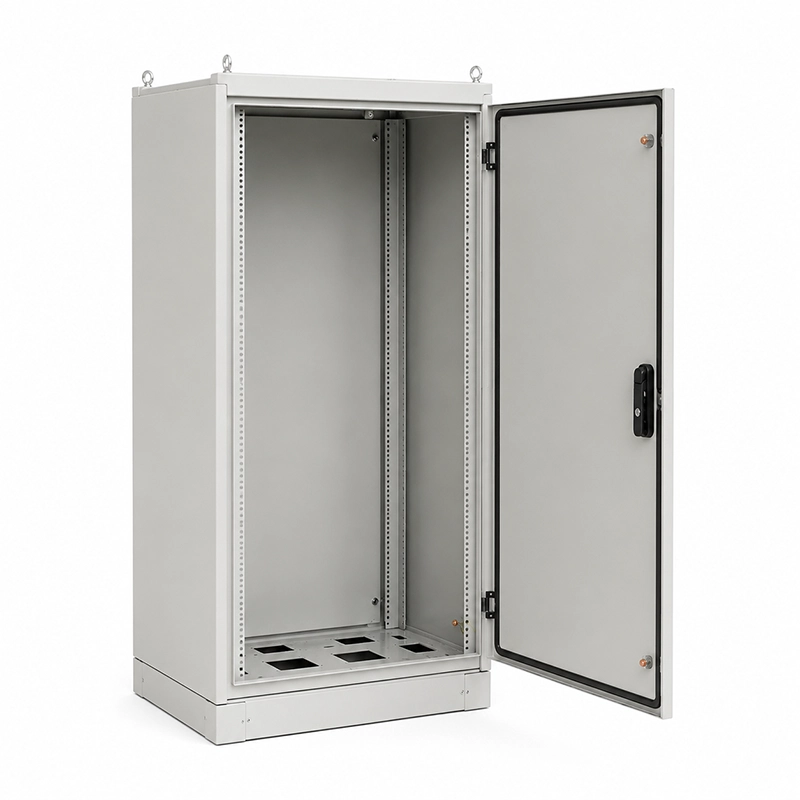

Custom Sheet Metal Electrical Cabinets
These sheet metal electrical cabinets are fabricated through cutting, bending, welding, and finishing processes to create enclosed structures with specified access and mounting features. Door openings, internal supports, and cable entry areas can be considered within the cabinet layout. Used in industrial control and automation equipment, the metal enclosure provides a physical boundary for electrical assemblies while supporting practical equipment installation and maintenance access.
Quick Info:
- Material: Stainless Steel / Carbon Steel / Aluminum
- Sheet Thickness: 0.8–3.0 mm
- Processing: Laser Cutting / Bending / Welding
- Tolerance: ±0.10–0.30 mm
- Surface Finish: Powder Coating / Brushing / Galvanizing
- Lead Time: 10–20 Working Days

Get Free Quote


Detailed Description
A control cabinet must protect electrical assemblies while leaving enough room to connect and service them. sheet metal electrical cabinets can house control modules, cable terminations and internal mounting rails behind formed doors or removable panels. Door swing, wiring bend radius and access to fastening points influence the enclosure dimensions as much as the equipment footprint.
Cutting creates the cable entries and ventilation apertures before bending and welding establish the body. Hinges and locks set the access arrangement, while internal plates provide surfaces for the installed hardware. Panel-to-door clearances need review with the actual equipment layout.
Available Surface Finishes
- Powder Coating: Provides durable protection and customizable appearance.
- Brushed Stainless Steel: Creates a clean industrial finish.
- Bead Blasting: Produces a uniform matte surface.
- Galvanizing: Improves corrosion resistance for steel cabinets.
- Anodizing: Available for aluminum cabinet components.
Powder coating is a common finish for steel enclosures; brushed stainless steel or anodized aluminum may suit other appearance and exposure conditions. Finishing requirements should distinguish external surfaces from contact and grounding points.
Structural & Functional Breakdown
- Reinforced Cabinet Frames: Improve structural strength for larger electrical assemblies.
- Mounting Plates: Provide secure installation surfaces for electrical components.
- Cable Management Openings: Support wiring and connection requirements.
- Ventilation Features: Allow airflow for heat dissipation.
- Hinged Access Panels: Simplify maintenance and equipment inspection.
Ventilation cutouts may support airflow, but a complete enclosure also needs a review of dust, liquid and environmental exposure. The presence of vents does not establish an ingress-protection rating, and any protective performance requires specification and verification.
Key Features
- Custom Cabinet Dimensions: Cabinet sizes, layouts and mounting structures can be customized according to equipment requirements.
- Integrated Fabrication Process: Cutting, bending, welding and finishing are combined into one production workflow.
- Functional Openings: Cable ports, ventilation holes and mounting interfaces can be incorporated directly.
- Durable Sheet Metal Construction: Steel, stainless steel and aluminum options support different environments.
- Surface Protection Options: Multiple finishing methods improve corrosion resistance and appearance.
- Prototype & Batch Production: Suitable for equipment development and repeat industrial manufacturing.
For an automation cabinet with a hinged front door, sheet metal electrical cabinets can reserve a cable-entry area below the terminal field and leave the central mounting plate accessible during service. A well-positioned opening also helps prevent wiring from obstructing the door or removable equipment modules.
Applications
- Industrial Automation
- Electrical Control Systems
- Machine Equipment
- Power Distribution Systems
- Manufacturing Equipment
- Control Panels
- Outdoor Electrical Installations
Specify internal component positions, door orientation, material, finish and sealing requirements before finalizing the fabrication drawing. These details help avoid last-minute conflicts between cable access, hinge hardware and the outer cabinet envelope.

Frequently Asked Questions
-
How do internal components determine cabinet size?

-
Module footprints, wiring clearances, thermal needs and maintenance access contribute to the width, depth and door arrangement.
-
Can a cabinet include custom cable entries?
-
Yes. Cutouts and removable entry plates can follow the layout of the planned glands, connectors or wiring bundles.
-
Does a ventilated cabinet automatically have an IP rating?
-
No. An IP rating depends on the complete enclosure design and verification, including doors, seals, vents and cable entries.
-
Which materials work for a corrosive environment?
-
Stainless steel or selected finishes may offer more corrosion protection than untreated carbon steel, but selection depends on the actual exposure conditions.
-
Can the mounting plate be removable?
-
A removable plate can be considered where installation or servicing calls for it. The fastening and clearance arrangement must suit the cabinet design.
-
What should be checked around a hinged door?
-
Confirm opening angle, lock clearance, wiring interference and access to modules after the door is fully open.
-
Are powder-coated contact surfaces acceptable for grounding?
-
Grounding interfaces need their own electrical and finishing requirements. Coatings may need defined contact points or additional hardware.
-
What information supports cabinet development?
-
Provide a 3D layout, electrical component dimensions, cable entry positions, access requirements, material, finish and any specified environmental rating.


