




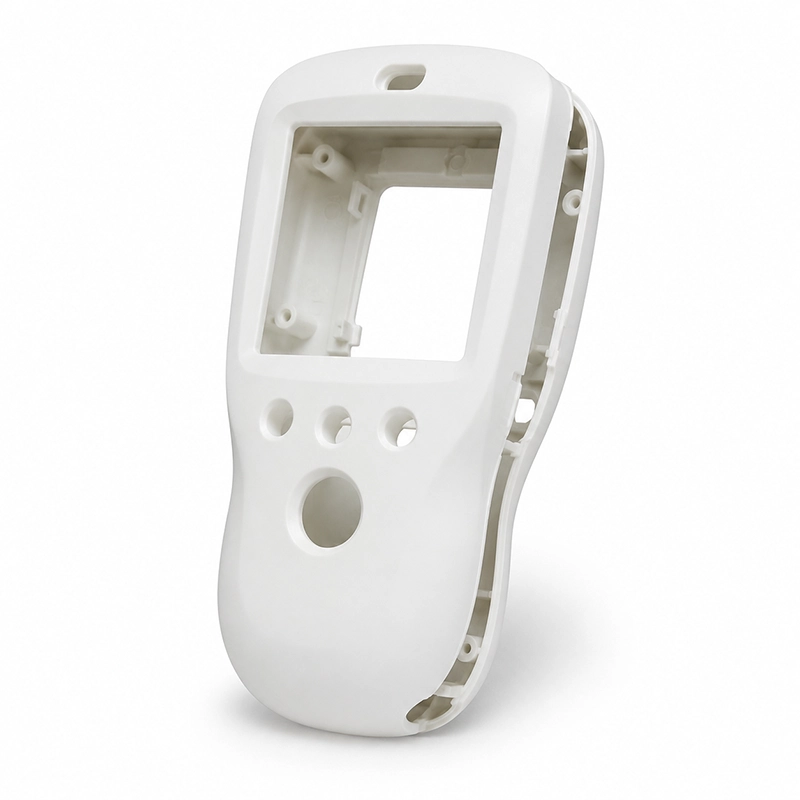

Vacuum Cast Medical Device Housings
Vacuum cast medical device housing prototypes can include internal bosses, openings, connection features, and shaped gripping surfaces. Polyurethane casting materials allow these details to be reproduced from a master pattern for physical review. The resulting housings can be used to check component placement, examine enclosure assembly, and compare external forms during the development of diagnostic instruments or handheld medical equipment.
Quick Info:
- Wall Thickness: 1.5–5.0 mm
- Dimensional Tolerance: ±0.2–0.3 mm
- Material: ABS-like PU, PC-like PU, Rigid Polyurethane
- Surface Finish: Matte, Gloss, Painted, Textured
- Lead Time: 5–12 working days

Get Free Quote


Detailed Description
A handheld diagnostic shell has to fit a display, battery space, fastening points and fingers around its controls. Medical device housing prototypes allow those interfaces to be assembled and held in the hand before a final mold fixes their positions. Vacuum-cast polyurethane can reproduce a shaped grip with internal bosses and a precise outline for the screen opening.
A silicone tool copies the master model, including shallow ventilation slots and the surface around a recessed button. Sample shells let the development team check whether the display sits flush, the battery compartment closes properly, and tools can reach the retaining screws. Several copies can support separate fit and handling sessions.
Available Surface Finishes
- Fine Matte Finish: Common for diagnostic and handheld device housings.
- Gloss Finish: Suitable for selected visible surfaces.
- Medical-style White Painting: Creates clean presentation prototypes.
- Texture Replication: Adds grip or decorative texture where required.
Fine matte textures reduce surface glare on handheld equipment, while gloss accents highlight selected areas around displays or controls. White paint creates a neutral appearance for diagnostic instrument shells, with fastening edges and connector openings kept clear for assembly.
Structural & Functional Breakdown
- Ergonomic Housing Structure: Supports handheld and user-facing device designs.
- Internal Mounting Boss Structure: Provides mounting positions for prototype electronics.
- Display & Control Opening Structure: Supports screens, buttons and interface components.
- Ventilation Structure: Allows airflow and thermal design to be evaluated.
The internal wall geometry carries a different set of design requirements from the grip. Boss spacing, stiffening ribs, ventilation paths and connectors share limited space. Fitting the matching electronics and hardware reveals how these features interact inside the closed shell.
Key Features
- Design Validation Before Tooling: Allows housing geometry to be tested before injection mold investment.
- Production-like Surface Appearance: Suitable for clinical-design review and presentation.
- Multiple Identical Samples: Supports engineering tests and user studies.
- Flexible Design Changes: New masters and silicone molds can accommodate revisions quickly.
Medical device housing prototypes support detailed assessments of handling, internal layout and control access. Different polyurethane formulations provide options for stiffness, texture and appearance, allowing the housing geometry to evolve alongside the equipment design.
Applications
- Diagnostic Equipment
- Handheld Medical Devices
- Laboratory Instruments
- Monitoring Equipment
- Medical Product Development

Frequently Asked Questions
-
Can vacuum-cast housings include a battery compartment?

-
A suitable master can include battery-space geometry, compartment edges and fastening details for early dimensional and fit checks.
-
Which features matter most in a handheld shell?
-
Grip contour, screen placement, controls, connector access and internal fastening locations usually deserve direct physical checks.
-
Can multiple housings support separate design evaluations?
-
Silicone tools can provide repeated samples, with the practical quantity determined by geometry, resin and mold life.
-
What kinds of medical equipment can these housings represent?
-
The cast housings serve design-stage equipment development, including handling, enclosure fit and control placement. Material and compliance specifications belong to the finished device design.
-
Can a matte texture appear on selected grip areas?
-
A textured master can transfer a defined grip surface into the cast shell. Paint and coating choices may change its final feel.
-
How are display and button locations checked?
-
Assemble the actual display or representative hardware into the housing and inspect accessibility, alignment and clearance.
-
How do polyurethane material options affect a medical housing prototype?
-
Different polyurethane formulations vary in stiffness, surface feel and impact response. A housing prototype can represent the intended geometry and selected handling characteristics.
-
Which documents help evaluate a housing sample?
-
Provide the 3D model, 2D critical dimensions, electronics envelope, preferred finish, sample quantity and any material restrictions.


