





3D Printing of Lattice & Bionic Structure Parts
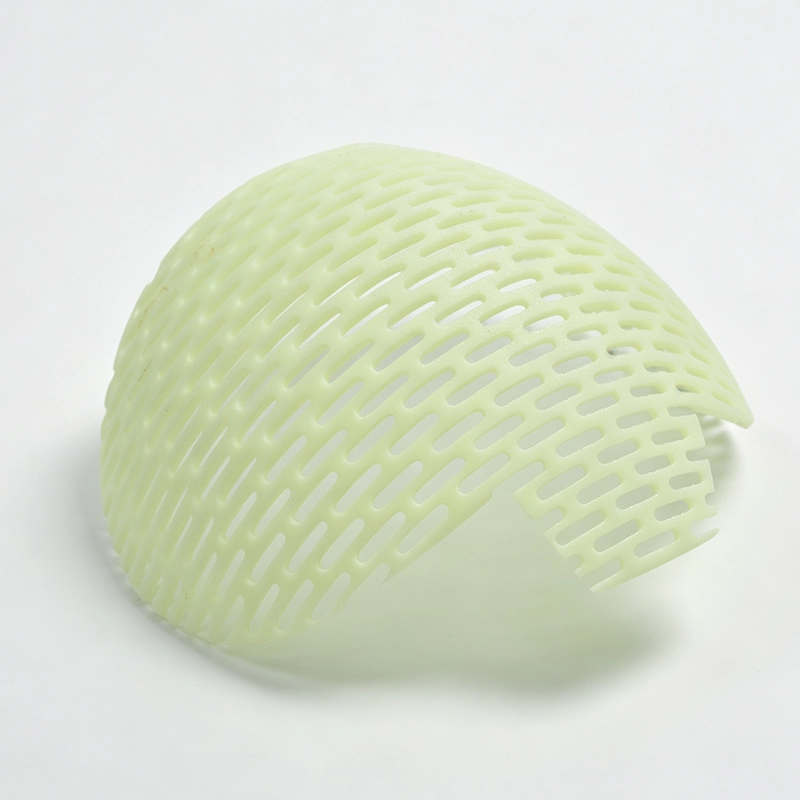
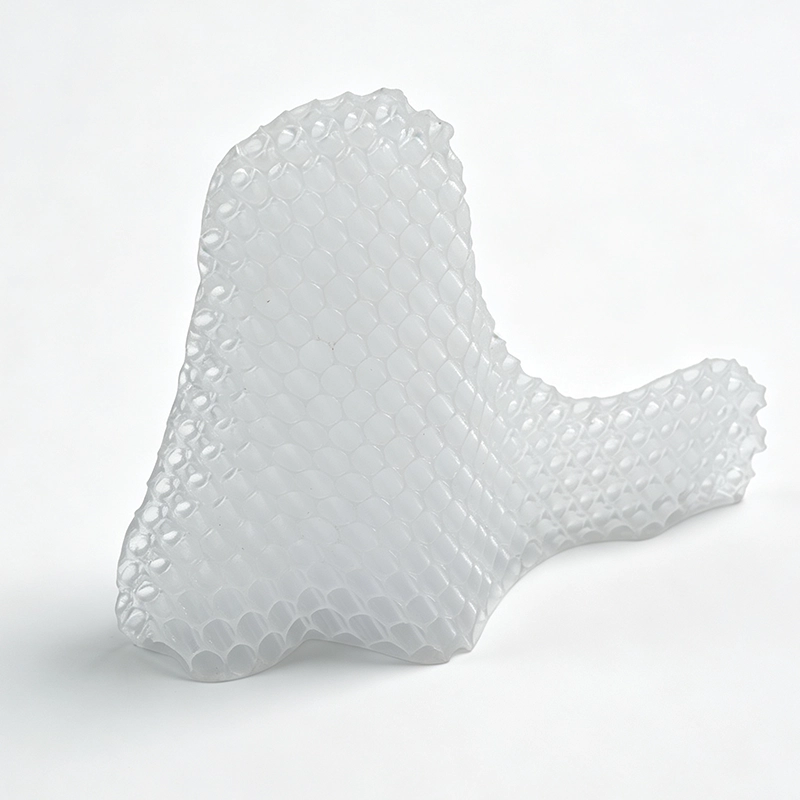
SLA and SLS 3D printing can reproduce honeycomb or other intricate lattice forms that would be challenging to make through conventional solid-part machining. These components are relevant to lightweight development work, including wearable designs and experimental industrial structures. Cell geometry, openings, and overall shape can be varied to study properties such as flexibility, airflow access, or response to mechanical loading.
quick Info:
- Process: SLA / SLS 3D Printing
- Tolerance: ±0.10mm – ±0.15mm
- Lead Time: 4–8 Working Days
- Material: Transparent Resin, Tough Resin, Nylon PA12
- Surface Finish: Sandblasting, Polishing, Transparent Coating
- Service: Custom Lattice Parameter, One‑off Prototype, Small Batch Production

Get Free Quote


Detailed Description
Open cellular geometry gives lightweight parts a distinct structural character. 3D printed lattice structures combine repeating struts, irregular bionic cells and reinforced outer boundaries within one continuous body. Porous sections occupy regions where a solid wall would otherwise add material, while thicker edges create usable contact and attachment surfaces.
Interconnected openings pass through the core and remain visible from multiple directions. Wearable frameworks can use those passages for ventilation, while mechanical buffer samples take advantage of the cell network during compression. SLA and SLS processes create the three-dimensional structure without building every strut as a separate component.
Available Surface Finishes
- As‑printed: Raw printing surface with visible powder/layer traces, for internal structural performance test only.
- Sandblasting: Uniform matte surface, remove residual powder, improve coating adhesion.
- Fine Polishing: Smooth outer surface, keep internal lattice structure intact, for demonstration display.
- Transparent Coating: Clear protective layer for resin lattice parts, maintain light transmission and anti‑aging property.
Surface work on porous geometry differs from finishing a solid enclosure. Sandblasting reaches exposed struts, while careful polishing concentrates on reachable edges and outer presentation areas.
Structural & Functional Breakdown
- Custom‑Density Lattice Framework: Adjustable pore size and strut thickness to balance weight reduction and mechanical load‑bearing capacity.
- Integral Porous Bionic Forming: One‑piece forming of complex honeycomb/bionic network without assembly seams, guarantee structural continuity.
- Ventilation & Buffer Cavity Structure: Interconnected internal cavities realize air circulation and impact absorption, hard to achieve via CNC machining.
- Reinforced Boundary Structure: Thickened edge framework avoids local stress fracture during compression and impact.
Reinforced perimeter zones provide a transition between open cells and attachment features. Pore spacing, strand layout and boundary shape remain part of the same printed component.
Key Machining Highlights
- Complex Lattice Generative Printing: Support generative‑design bionic geometry, produce intricate porous structures unachievable by traditional subtractive processing.
- Controllable Material Performance: Select resin or nylon material to meet requirements of transparency, toughness or impact resistance.
- Strict Powder Removal Process: Complete internal cavity cleaning to eliminate residual printing powder inside tiny lattice gaps.
- Parameter‑Driven Customization: Adjust lattice parameters according to customer load‑testing requirements, realize targeted lightweight solution.
Connected passages establish recognizable airflow openings through a wearable or protective shell. Smaller cells create detailed texture, whereas larger openings reveal more of the internal network.
Application Fields
- Medical Protective Gear Structural Prototypes
- Smart Wearable Device Lightweight Housings
- Mechanical Shock‑Absorbing Buffer Components
- New Product Light‑Weighting R&D Verification
- Special‑shaped Breathable Functional Parts
Wearable device frames combine open ventilation regions with thicker edges around straps or enclosure connections. Lightweight demonstration structures use a similar vocabulary of cellular cores and solid attachment regions for entirely different mechanical arrangements.
3D printed lattice structures provide an expressive alternative to uniformly thick walls in early physical concepts. Visible cells, connected cavities and a recognizable outer frame show the internal construction without hiding it behind a solid skin.

Frequently Asked Questions
-
What forms the core of a printed lattice part?

-
Connected struts and cellular openings replace portions of solid material inside a continuous structure.
-
Which additive processes are listed?
-
SLA and SLS are both identified for the porous and bionic geometries.
-
Can a lattice include a solid mounting perimeter?
-
Reinforced outer frames can connect the open cell network to denser attachment regions.
-
How are airflow passages incorporated?
-
Interconnected cells create openings through the printed core rather than a separate drilled ventilation pattern.
-
Are lattice designs restricted to regular honeycombs?
-
Bionic and generative-style geometries can use varied cell shapes alongside repeating honeycomb arrangements.
-
What finishes apply to exposed lattice surfaces?
-
As-printed surfaces, sandblasting, fine polishing and selected transparent coatings.
-
Do printed lattices need separate assembled struts?
-
Additive manufacturing can form the connected network as a single printed structure.


