Innovations and Trends in CNC Machining

Innovations and Trends in CNC Machining

Innovations and Trends in CNC Machining

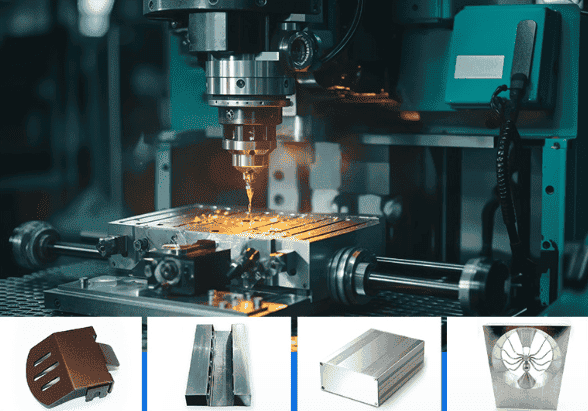
Since the advent of CNC (Computer Numerical Control) machining technology, the field has undergone remarkable transformations, with continuous development of new technologies to meet manufacturing demands. As we further enter the digital age, several key innovations and trends are shaping the future of CNC machining. This article explores these advancements and uses practical examples to illustrate their impact on the entire machining industry.

1.Advanced CNC Software and Simulation Tools

An important trend in CNC machining is the development of advanced software and simulation tools. Modern CNC software not only provides basic programming functions but also includes features such as real-time monitoring, predictive maintenance, and model simulation.

Application Example:
Due to the high cost of producing aerospace parts, simulation before actual machining is crucial. This technology enables manufacturers to minimize error rates and material waste while ensuring all parts meet strict aerospace standards.

2. High-Speed Machining (HSM)
High-Speed Machining (HSM) is another rapidly advancing innovation in CNC machining. HSM offers faster cutting and feed rates, significantly reducing production time and improving surface finish.

Application Example:
HSM technology can achieve higher spindle speeds and use advanced tools to produce engine parts. During the machining process, this technology can increase production speed while maintaining precise tolerances, thereby reducing unit costs.

3. Multi-Axis Machining
Multi-axis machining, including the common 3-axis, 4-axis, and 5-axis machine tools, can reduce the number of setup changes and tool replacements while producing highly complex parts. This capability is particularly beneficial for industries such as aerospace, medical, and mold manufacturing.


Application Example:
5-axis CNC machining centers can process parts with complex curves and arcs, such as ski goggles and VR headsets. Manufacturers can shorten production time while producing high-precision and high-quality parts, ensuring the goggles meet strict performance and safety standards.


4. Additive and Hybrid Additive Manufacturing
The integration of additive manufacturing (3D printing) with traditional CNC machining has given rise to hybrid additive manufacturing. This method combines the advantages of both, enabling the creation of complex parts using additive technology followed by precision finishing through subtractive machining.

Application Example:
CNC machining can use hybrid machine tools to 3D print a complex mold, which is then finished with precision CNC milling. Compared to traditional methods, this can significantly shorten lead times and reduce costs.

5. New Cutting Tools and Materials
Advancements in tools and materials are also driving innovations in CNC machining. New types of cutting tools, such as diamond-coated and ceramic tools, make processing difficult-to-machine materials more efficient.

Application Example:
CNC machining can utilize diamond-coated tools to process heat sinks made of aluminum and copper alloys. This technology can achieve longer tool life and better surface finish, enhancing the performance and reliability of the heat sinks.

6. Automation and Robotics
The application of automation and robotics in the field of CNC machining is becoming increasingly widespread. Automatic tool change systems, pallet systems, and robotic arms can perform repetitive actions automatically, improving production efficiency and reducing labor costs.

Application Example:
Robotic arms can load and unload parts from CNC machine tools, increasing production volume and reducing labor requirements and the risk of injuries.

7. Sustainability and Environmentally Friendly Materials
Sustainability and environmental protection have become important considerations in the manufacturing industry. In recent years, many processing plants have adopted dry machining, minimum quantity lubrication (MQL), and the use of biodegradable coolants to reduce environmental impact.

Application Example:
CNC machining can assist in the application of MQL technology, which only requires a small amount of lubricant to deliver to the cutting area. This technology can reduce coolant waste and disposal costs while maintaining the high quality of machined parts.

8. Customization and Mass Customization
CNC machining can meet the demand for customization and product personalization. Advancements in CNC technology enable efficient production of small-batch and one-off parts without compromising quality or increasing costs.

Application Example:
CNC machining can produce custom phone cases and components according to individual customer specifications. It allows flexible and rapid switching between different designs and materials, achieving high-precision manufacturing to meet each customer’s unique needs, and processing personalized phone cases efficiently and cost-effectively.

9. Quality Control and Inspection
Quality control and inspection technologies are advancing alongside CNC machining. Advanced measurement tools and real-time inspection systems can ensure parts meet precise product specifications throughout the manufacturing process.

Application Example:
CNC real-time inspection systems can monitor the dimensions and tolerances of workpieces in real time. It detects any machining errors immediately, reducing the risk of non-conforming parts entering the final assembly.


Innovations and trends in CNC machining are advancing the industry, enhancing efficiency and precision to meet the evolving demands of modern manufacturing. By leveraging these trends, TOP Prototype is committed to delivering optimal solutions that help customers maintain a competitive edge in the dynamic manufacturing landscape. We hope this article has deepened your understanding of aluminum CNC machining, including its properties, applications, and latest industry developments. For further discussions or support, please do not hesitate to contact us—our TOP Prototype team will provide professional assistance promptly.
Let's Start A New Project Today

Latest Blog Posts

Check out the latest industry trends and take inspiration from our updated blogs, giving you a fresh insight to help boost your business.

CNC Machining of Aluminum: Properties and Applications by TOP Prototype

CNC Machining of Aluminum: Properties and Applications by TOP Prototype Aluminum, with its unique combination of physical and mechanical properties, …

Tapped Holes vs Threaded Holes – Differences and Comparison

Tapped Holes vs Threaded Holes – Differences and Comparison In mechanical manufacturing, assembly, and precision engineering, internal threaded holes serve as the “connective tissue” of components, enabling secure fastening, precise positioning, and stable load transmission. Tapped holes and threaded holes, two widely applied types of internal threaded structures, are often conflated due to their overlapping functional goals. Yet their divergence in processing principles, structural integrity, and practical performance is substantial—differences that directly affect product reliability, production costs, and service life. This article systematically distinguishes the two, enriches the discussion with industrial practices and material science facts, simplifies complex terminology, and reconstructs the logical framework to clarify their characteristics, advantages, and application boundaries for engineering practitioners. 1. Definitions and Core Structural Traits 1.1 Tapped Holes: Direct Thread Formation in Base Material A tapped hole is an internal threaded hole formed by the tapping process, where a specialized cutting tool (tap) cuts or forms threads on the inner wall of a pre-drilled pilot hole. Unlike indirect threading methods, tapped holes integrate threads directly into the workpiece’s base material—no auxiliary inserts or reinforcements are involved. Taps operate on a subtractive principle: they remove excess material from the pilot hole’s inner surface to form standardized thread profiles, such as metric (M series), unified coarse (UNC), or unified fine (UNF) threads, with precision grades ranging from 2B (general purpose) to 3B (high precision) for imperial threads. This integration with the base material means tapped holes’ performance is inherently tied to the workpiece’s material properties. For instance, in medium-carbon steel (e.g., 45# steel) or 6061 aluminum alloy—materials with moderate ductility and strength—tapped holes deliver reliable thread retention. They are widely adopted in scenarios where the workpiece itself can bear fastening loads, avoiding the need for additional components. 1.2 Threaded Holes: A Broad Category with Indirect Threading Dominance The term “threaded hole” is a generic concept encompassing all holes with internal threads, including tapped holes. In industrial practice, however, it primarily refers to holes where threads are formed indirectly—most commonly via threaded inserts. These inserts, made of high-strength materials like 304 stainless steel or titanium alloy, are installed into pre-drilled holes to provide the internal thread interface, decoupling thread performance from the workpiece’s base material. Beyond insert-based threading, threaded holes also include structures formed by thread rolling, casting, or injection molding. Thread rolling, for example, is used for high-volume production of ductile materials like copper or low-carbon steel, forming threads through plastic deformation rather than cutting. Cast or molded threaded holes are integral to composite parts (e.g., glass-fiber reinforced plastic) or plastic components, where threads are pre-designed in the mold to eliminate post-processing. 2. Core Differences in Processing Principles and Operations The fundamental gap between tapped holes and threaded holes lies in their thread formation mechanisms—each dictating processing efficiency, precision limits, and material applicability. Simplifying these mechanisms reveals why each is preferred in specific scenarios. 2.1 Tapped Holes: Two-Step Subtractive Processing Tapping follows a rigid two-step workflow: first, drilling a pilot hole with a diameter strictly matched to the target thread (e.g., a 6.8mm pilot hole for an M8×1.25 tap); second, cutting threads using a hand tap (for small batches or manual operations) or machine tap (for automated production on CNC lathes, milling machines, or dedicated tapping centers). Critical process parameters directly impact thread quality: tap speed (typically 10-30 m/min for steel, 20-50 m/min for aluminum), feed rate (matched to thread pitch to avoid thread distortion), and lubrication (cutting oil for ferrous metals, cutting fluid for non-ferrous metals to reduce friction and prevent burring). Brittle materials like gray cast iron (HT200) or zirconia ceramic require specialized spiral-flute taps to evacuate chips and avoid cracking, while ductile materials like copper demand straight-flute taps for smooth chip removal. 2.2 Threaded Holes: Indirect Formation with Diversified Methods Insert-based threaded holes, the most common type, follow a three-step process: drilling a hole matching the insert’s outer diameter (e.g., a 10.2mm hole for an M8 helical insert), installing the insert via pressing, self-tapping, or adhesive bonding, and verifying thread accuracy. Helical wire inserts (HeliCoils), for example, are coiled stainless steel wires with a diamond cross-section—when installed, they expand to lock into the pre-drilled hole, distributing fastening loads over a larger surface area to prevent thread stripping. Other threading methods for threaded holes have clear niche applications: thread rolling achieves higher thread strength (up to 30% higher than cut threads due to work hardening) and is used for high-volume parts like automotive bolts; casting/molding eliminates post-processing but is limited to parts with simple thread geometries, as complex threads may cause mold release issues. 3. Performance Comparison and Practical Application Scenarios Evaluating strength, precision, cost, and maintainability reveals the practical trade-offs between tapped holes and threaded holes. Grounded in industrial data and real-world cases, this comparison helps engineers make evidence-based selections. …

Analysis of Causes and Solutions of Surface Roughness Issues in CNC Machining

Analysis of Causes and Solutions of Surface Roughness Issues in CNC Machining In CNC machining, surface roughness is critical—it directly …

Scroll to Top

Contact Us

Upload Your Files to Get Instant Quote and DFM Feedback
(Please attach 2D CAD drawings and 3D CAD models in any format including STEP,STP, IGES, DWG, PDF, STL, PDF, JPG , ZIP, RAR, etc