• Home
  • Resources
  • Blogs
  • The Crucial Role of CNC Machined Parts in the Medical Industry by TOP Prototype

The Crucial Role of CNC Machined Parts in the Medical Industry by TOP Prototype

The Crucial Role of CNC Machined Parts in the Medical Industry by TOP Prototype

The Crucial Role of CNC Machined Parts in the Medical Industry by TOP Prototype


CNC Machined Parts in the Medical Industry


The medical industry is constantly evolving, driven by the need for more precise, reliable, and innovative solutions to improve patient care and treatment outcomes. One of the key elements contributing to this progress is the use of CNC machined parts, and companies like TOP Prototype are playing a significant role in this arena.


The Precision Demanded in Medical Applications

 

Medical devices and equipment

Medical devices and equipment require an extraordinary level of precision. In surgeries, for example, the smallest error in a component can have serious consequences for a patient’s health and well-being. CNC machining is renowned for its ability to produce parts with extremely tight tolerances.

It can accurately shape and size components to within micrometers, ensuring that they fit and function perfectly in medical devices. Whether it’s a tiny implantable part or a complex surgical instrument, the precision of CNC machining is essential. TOP Prototype understands this need for precision and has invested in state-of-the-art CNC machining technology and processes to meet the strict requirements of the medical industry.


. The Applications of CNC Machined Parts in Medical Devices
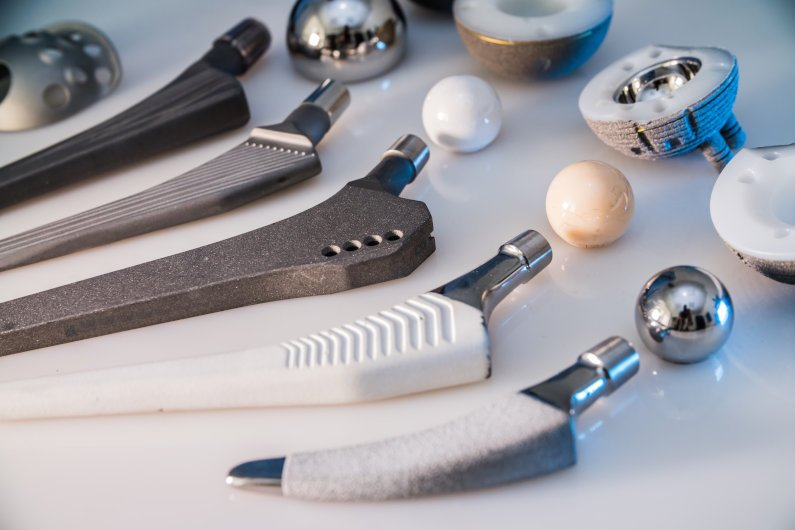
Applications of CNC Machined Parts in Medical Devices

Implants and Prosthetics

 CNC machined parts are widely used in the production of implants and prosthetics. These components need to be biocompatible and precisely crafted to fit the patient’s anatomy accurately. For instance, a knee implant must be designed and manufactured with great precision to ensure proper joint function and long-term durability. TOP Prototype has the expertise to produce high-quality CNC machined implants and prosthetics that meet the highest standards of quality and performance. Their parts are made from materials that are carefully selected for their biocompatibility and mechanical properties, providing patients with reliable and comfortable solutions.


Surgical Instruments

Surgical instruments also rely heavily on CNC machining. The precision and durability of CNC machined parts are crucial for the effectiveness and safety of these tools. From scalpels with sharp and precise edges to complex surgical staplers, CNC machining ensures that each instrument functions flawlessly during surgeries. TOP Prototype manufactures a wide range of surgical instruments using CNC machining techniques, providing healthcare professionals with reliable tools that aid in accurate diagnoses and effective treatments.


Medical Imaging Equipment

In the field of medical imaging, such as CT scanners and MRI machines, CNC machined parts play a vital role in ensuring the accuracy and reliability of the equipment. These parts are used in the construction of the imaging components, such as the gantries and detectors, to ensure precise movement and accurate data acquisition. TOP Prototype’s CNC machined parts contribute to the high performance of medical imaging equipment, enabling doctors to obtain clear and detailed images for accurate diagnoses.


. The Quality and Compliance Standards of TOP Prototype

Quality and Compliance Standards

Stringent Quality

Control TOP Prototype places great emphasis on quality control. They have a comprehensive quality management system in place that monitors every stage of the CNC machining process. From the selection of raw materials to the final inspection of the finished parts, strict quality checks are carried out to ensure that each part meets the exacting standards of the medical industry. Their experienced quality control team uses advanced inspection equipment and techniques to verify the dimensions, surface finish, and material properties of the CNC machined parts, guaranteeing their reliability and safety for medical applications.


Compliance with Regulatory Requirements

The medical industry is highly regulated to ensure the safety and effectiveness of medical products. TOP Prototype is well-versed in these regulations and ensures that all its CNC machined parts comply with relevant standards such as ISO 13485 and FDA regulations. This commitment to compliance not only assures the quality and safety of their products but also enables them to serve customers in the global medical market. By adhering to these strict regulations, TOP Prototype helps medical device manufacturers meet the legal requirements and bring their products to market with confidence.


. The Innovation and Future Outlook


Innovation and Future Outlook

Continuous Innovation

TOP Prototype is constantly striving to innovate in the field of CNC machining for the medical industry. They invest in research and development to explore new materials, machining techniques, and design concepts. This innovation allows them to offer more advanced and customized solutions to their customers. For example, they are exploring the use of additive manufacturing in combination with CNC machining to create complex geometries and lightweight yet strong parts for medical applications.


Future Trends and Opportunities

As the medical industry continues to advance, the demand for CNC machined parts is expected to grow. With the increasing focus on minimally invasive surgeries and personalized medicine, there will be a need for even more precise and customized components.

TOP Prototype is well-positioned to capitalize on these trends. They are expanding their capabilities and collaborating with medical institutions and device manufacturers to develop new solutions that meet the evolving needs of the industry. In the future, we can expect to see TOP Prototype playing an even more significant role in the development of innovative medical devices and treatments through their high-quality CNC machined parts.


Conclusion

In conclusion, CNC machined parts are indispensable in the medical industry, and TOP Prototype has established itself as a leading provider of these critical components. Their commitment to precision, quality, compliance, and innovation makes them a valuable partner for medical device manufacturers and healthcare providers. As the medical industry continues to progress, TOP Prototype will continue to contribute to improving patient care and outcomes through the production of superior CNC machined parts.

Let's Start A New Project Today

Latest Blog Posts

Check out the latest industry trends and take inspiration from our updated blogs, giving you a fresh insight to help boost your business.

Tapped Holes vs Threaded Holes – Differences and Comparison

Tapped Holes vs Threaded Holes – Differences and Comparison In mechanical manufacturing, assembly, and precision engineering, internal threaded holes serve as the “connective tissue” of components, enabling secure fastening, precise positioning, and stable load transmission. Tapped holes and threaded holes, two widely applied types of internal threaded structures, are often conflated due to their overlapping functional goals. Yet their divergence in processing principles, structural integrity, and practical performance is substantial—differences that directly affect product reliability, production costs, and service life. This article systematically distinguishes the two, enriches the discussion with industrial practices and material science facts, simplifies complex terminology, and reconstructs the logical framework to clarify their characteristics, advantages, and application boundaries for engineering practitioners. 1. Definitions and Core Structural Traits 1.1 Tapped Holes: Direct Thread Formation in Base Material A tapped hole is an internal threaded hole formed by the tapping process, where a specialized cutting tool (tap) cuts or forms threads on the inner wall of a pre-drilled pilot hole. Unlike indirect threading methods, tapped holes integrate threads directly into the workpiece’s base material—no auxiliary inserts or reinforcements are involved. Taps operate on a subtractive principle: they remove excess material from the pilot hole’s inner surface to form standardized thread profiles, such as metric (M series), unified coarse (UNC), or unified fine (UNF) threads, with precision grades ranging from 2B (general purpose) to 3B (high precision) for imperial threads. This integration with the base material means tapped holes’ performance is inherently tied to the workpiece’s material properties. For instance, in medium-carbon steel (e.g., 45# steel) or 6061 aluminum alloy—materials with moderate ductility and strength—tapped holes deliver reliable thread retention. They are widely adopted in scenarios where the workpiece itself can bear fastening loads, avoiding the need for additional components. 1.2 Threaded Holes: A Broad Category with Indirect Threading Dominance The term “threaded hole” is a generic concept encompassing all holes with internal threads, including tapped holes. In industrial practice, however, it primarily refers to holes where threads are formed indirectly—most commonly via threaded inserts. These inserts, made of high-strength materials like 304 stainless steel or titanium alloy, are installed into pre-drilled holes to provide the internal thread interface, decoupling thread performance from the workpiece’s base material. Beyond insert-based threading, threaded holes also include structures formed by thread rolling, casting, or injection molding. Thread rolling, for example, is used for high-volume production of ductile materials like copper or low-carbon steel, forming threads through plastic deformation rather than cutting. Cast or molded threaded holes are integral to composite parts (e.g., glass-fiber reinforced plastic) or plastic components, where threads are pre-designed in the mold to eliminate post-processing. 2. Core Differences in Processing Principles and Operations The fundamental gap between tapped holes and threaded holes lies in their thread formation mechanisms—each dictating processing efficiency, precision limits, and material applicability. Simplifying these mechanisms reveals why each is preferred in specific scenarios. 2.1 Tapped Holes: Two-Step Subtractive Processing Tapping follows a rigid two-step workflow: first, drilling a pilot hole with a diameter strictly matched to the target thread (e.g., a 6.8mm pilot hole for an M8×1.25 tap); second, cutting threads using a hand tap (for small batches or manual operations) or machine tap (for automated production on CNC lathes, milling machines, or dedicated tapping centers). Critical process parameters directly impact thread quality: tap speed (typically 10-30 m/min for steel, 20-50 m/min for aluminum), feed rate (matched to thread pitch to avoid thread distortion), and lubrication (cutting oil for ferrous metals, cutting fluid for non-ferrous metals to reduce friction and prevent burring). Brittle materials like gray cast iron (HT200) or zirconia ceramic require specialized spiral-flute taps to evacuate chips and avoid cracking, while ductile materials like copper demand straight-flute taps for smooth chip removal. 2.2 Threaded Holes: Indirect Formation with Diversified Methods Insert-based threaded holes, the most common type, follow a three-step process: drilling a hole matching the insert’s outer diameter (e.g., a 10.2mm hole for an M8 helical insert), installing the insert via pressing, self-tapping, or adhesive bonding, and verifying thread accuracy. Helical wire inserts (HeliCoils), for example, are coiled stainless steel wires with a diamond cross-section—when installed, they expand to lock into the pre-drilled hole, distributing fastening loads over a larger surface area to prevent thread stripping. Other threading methods for threaded holes have clear niche applications: thread rolling achieves higher thread strength (up to 30% higher than cut threads due to work hardening) and is used for high-volume parts like automotive bolts; casting/molding eliminates post-processing but is limited to parts with simple thread geometries, as complex threads may cause mold release issues. 3. Performance Comparison and Practical Application Scenarios Evaluating strength, precision, cost, and maintainability reveals the practical trade-offs between tapped holes and threaded holes. Grounded in industrial data and real-world cases, this comparison helps engineers make evidence-based selections. …

Analysis of Causes and Solutions of Surface Roughness Issues in CNC Machining

Analysis of Causes and Solutions of Surface Roughness Issues in CNC Machining In CNC machining, surface roughness is critical—it directly …

TOP Prototype CNC Customization Precision Machining Tailored Solutions for Global Industrial Innovation   The Art and Science of TOP Prototype CNC Customization   CNC customization blends engineering precision with creative …

Scroll to Top

Contact Us

Upload Your Files to Get Instant Quote and DFM Feedback
(Please attach 2D CAD drawings and 3D CAD models in any format including STEP,STP, IGES, DWG, PDF, STL, PDF, JPG , ZIP, RAR, etc